 Shadowfetch
ShadowfetchNews reportBusiness & Markets
Apple’s OpenAI lawsuit turns a flagship AI partnership into a fight over who owns the next device
Apple’s trade-secret suit against OpenAI moves their AI partnership into a high-stakes business fight over hardware talent, suppliers and control of the consumer AI interface.

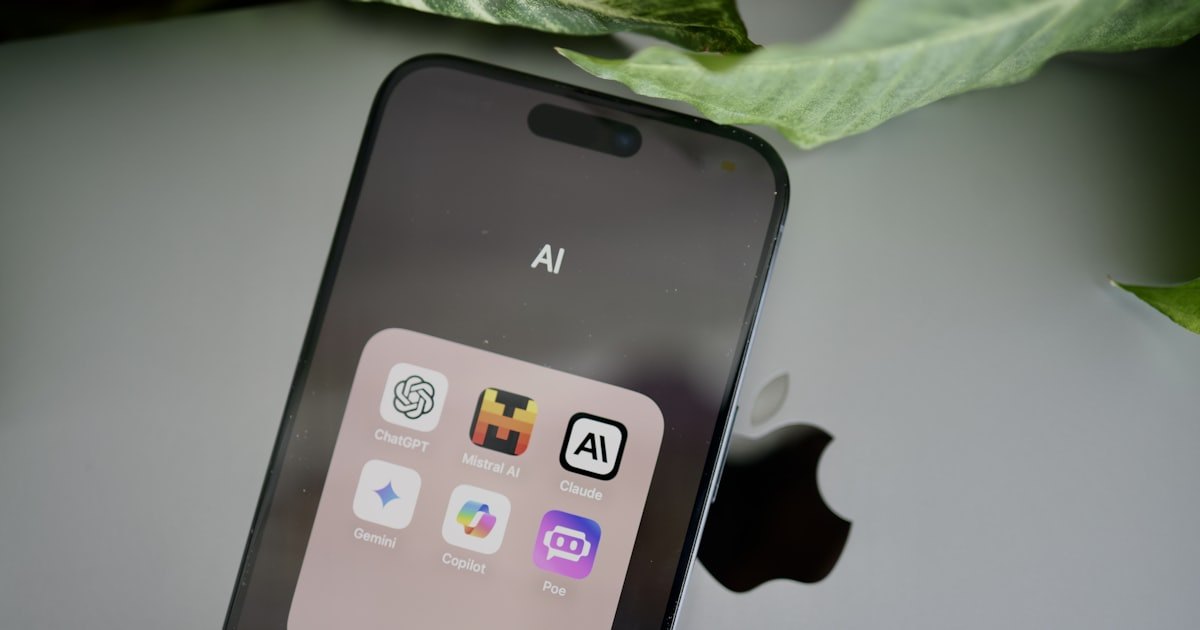
Apple’s lawsuit against OpenAI is more than a Silicon Valley breakup story. It is a business fight over the scarce parts of the AI economy that are not just model weights, cloud bills or chatbot subscriptions: product design, manufacturing know-how, supplier processes and the confidential hardware road maps that turn software hype into devices people actually buy.
Apple sued OpenAI in federal court in Northern California on Friday, accusing the ChatGPT maker of stealing trade secrets and confidential information as OpenAI pushes deeper into consumer hardware, according to reporting by CNBC and other outlets. CNBC, citing the legal filing, reported that Apple alleged the conduct reached “at every level, from members of its Technical Staff to its Chief Hardware Officer, and in coordination with business partners.”
OpenAI denied the premise of the suit in a statement to CNBC: “We have no interest in other companies’ trade secrets. We remain focused on building innovative technology that empowers people everywhere.”
The case lands less than two years after Apple publicly presented OpenAI as a partner inside Apple Intelligence, the company’s generative AI system for iPhone, iPad and Mac. In June 2024, Apple announced that ChatGPT would be integrated across Apple platforms, including Siri and writing tools, while pitching its own AI approach as privacy-centered and tightly bound to Apple hardware. That was a high-profile distribution win for OpenAI and a fast way for Apple to close an obvious chatbot gap without handing the whole user experience to an outside company.
Now the relationship looks like a live demonstration of the AI industry’s next commercial problem: the biggest players need one another’s capabilities, but they also compete for the same end users, engineers, suppliers and interface layer. Apple controls the device. OpenAI controls one of the most recognizable AI products in the market. If OpenAI can build a compelling AI-first gadget, the company does not have to remain an app, an API or a feature living inside someone else’s operating system. If Apple can keep AI interactions native to the iPhone, it protects the center of its services, hardware and developer ecosystem.
That is why this case belongs in business, not just tech. It could affect recruiting, partnerships, hardware supply chains, future IPO risk and the bargaining power between platform owners and AI labs.
What Apple is alleging
CNBC reported that Apple’s complaint names OpenAI, OpenAI’s hardware chief Tang Tan, former Apple employee Chang Liu and IO Products, the hardware startup OpenAI bought from former Apple design chief Jony Ive. CNBC said Apple is seeking damages, injunctions and an order requiring OpenAI to stop using Apple trade secrets.
The most commercially sensitive allegations are about hardware recruiting and supplier execution. According to CNBC’s account of the filing, Apple alleged that Tan, a former Apple vice president, directed Apple employees interviewing at OpenAI to bring “actual parts” from Apple to interviews for “show and tell” sessions. CNBC also reported that Apple accused OpenAI of coaching departing Apple employees on how to evade Apple security procedures and alleged that Liu stole an Apple laptop.
Apple also alleged, according to CNBC, that OpenAI asked hardware firms to use a metal finishing technique Apple says it invented while “misleading the partner to believe they had Apple’s permission to do so.”
Those claims are unproven allegations unless and until they are tested in court. But the shape of the accusation matters. Apple is not merely saying a rival copied a public product feature. It is saying a partner-turned-competitor tried to pull protected knowledge out of Apple’s internal design, manufacturing and prototype pipeline.
In consumer electronics, that kind of knowledge can be the business. The final device is what customers see; the trade secret is often how a company made it thin enough, durable enough, scalable enough and profitable enough to ship at volume. A finish, a component arrangement, a testing process or a supplier instruction can represent years of trial, capital spending and vendor coordination. Losing that know-how can matter more than losing a mockup.
Apple told CNBC that “significant evidence has emerged suggesting individuals employed by OpenAI wrongfully took Apple’s secret and confidential information regarding our unreleased technologies, processes, and products.” OpenAI’s denial is equally material for readers: the company says it is not interested in other companies’ trade secrets and remains focused on building its own technology.
Why the old partnership mattered
Apple and OpenAI’s public partnership began as a practical compromise. Apple was under pressure to show credible generative AI features after rivals moved faster with chatbots and AI assistants. OpenAI had the brand recognition and product usage Apple lacked. Apple had something every AI company wants: default access to hundreds of millions of premium devices, an installed base trained to use native apps, and a privacy story that could make AI feel less like a data grab.
Apple’s June 2024 newsroom announcement framed Apple Intelligence as a system that “combines the power of generative models with personal context” and runs across iOS, iPadOS and macOS. The same announcement said ChatGPT would be available through Siri and Apple’s writing tools, with user permission before questions, documents or photos were sent to ChatGPT.
That structure showed Apple’s priorities. OpenAI could supply capabilities, but Apple wanted to mediate the experience. The iPhone maker positioned itself as the trusted layer between a user’s personal context and outside AI models.
The lawsuit suggests the relationship became harder to contain once OpenAI decided it wanted hardware of its own. CNBC reported that OpenAI bought Jony Ive’s IO Products for $6.4 billion last year and that OpenAI CEO Sam Altman said in November that the company had completed its first prototypes, though OpenAI has not publicly announced what its hardware product will be or when it will arrive.
That acquisition changed the business logic. A software partner building hardware is not just another app maker. It is a potential platform competitor. Apple has spent decades making sure the most important computing interface in a consumer’s life is an Apple device. OpenAI’s consumer opportunity is to make AI the interface — and eventually, maybe, to make the physical device secondary to the assistant.
The hardware question behind AI valuations
OpenAI’s biggest public image is still ChatGPT, but the economics of AI are pushing the company toward broader control of the customer relationship. Model access can be sold through subscriptions, enterprise contracts and API usage. Those are large markets, but they are also crowded, expensive and exposed to platform gatekeepers.
A device gives an AI company a different kind of leverage. It can own the default interaction, shape data flows, design the input methods, and reduce dependence on Apple, Google, Microsoft or Meta for distribution. It can also create a premium hardware revenue stream, if the product is good enough and not just another gadget looking for a reason to exist.
That is a huge “if.” Consumer hardware is brutal. It requires supply-chain discipline, industrial design, reliability testing, inventory management, returns processing, retail strategy, support infrastructure and tight control over margins. Companies that are brilliant at software often underestimate how many ways a physical product can fail between prototype and scale.
This is where Apple’s allegations, if proven, would cut deepest. Apple’s advantage is not only its brand. It is the operational muscle behind the brand: the ability to turn design into millions of units, to control suppliers, to tune materials and finishes, and to keep future products confidential until launch. For a new entrant, acquiring hardware talent is normal. Misappropriating protected knowledge is not.
The court will have to sort the difference between lawful hiring and unlawful transfer of trade secrets. That boundary is one of the most important labor-market questions in the AI buildout. Workers carry experience in their heads. They cannot be forced to forget their careers when they change jobs. But companies can restrict employees from taking files, prototypes, confidential processes or proprietary designs. The harder the competition for AI hardware talent gets, the more often that line will be litigated.
A supply-chain story hiding inside a lawsuit
The metal-finishing allegation is especially important because it points beyond executives and engineers to suppliers. If Apple’s account is accurate, the dispute is not only about what former employees knew; it is about whether OpenAI or its partners tried to operationalize that knowledge with outside manufacturers.
That matters for the entire AI hardware supply chain. AI devices will need specialized components, new form factors, battery compromises, thermal management, microphones, cameras, privacy indicators and materials that can survive daily use. Supplier instructions can reveal what a product is, how it will be positioned and whether it can be made profitably.
Apple has spent years building leverage over that ecosystem. A startup, even one backed by OpenAI’s brand and capital, does not automatically get that leverage. Buying a design shop helps. Hiring Apple veterans helps. But scaling hardware requires convincing suppliers that the product will ship, the volumes are worth the attention and the design will not create legal exposure.
If a court were to find that a supplier process or finish was improperly taken, it could disrupt OpenAI’s hardware schedule, chill supplier participation or force redesigns. If OpenAI defeats the claims, the company may be able to argue that Apple is trying to use litigation to slow a legitimate new competitor before it launches.
Both outcomes are plausible at this early stage. The facts are not settled. What is settled is that the lawsuit raises the cost and complexity of OpenAI’s move from AI software into physical products.
The Siri and Gemini subplot
CNBC reported another commercially telling detail: Apple’s updated Siri assistant, expected this fall, is based on Google’s Gemini AI models rather than OpenAI’s technology. Apple did not tell CNBC whether the lawsuit will affect its existing partnership with OpenAI, including ChatGPT’s integration into Apple Intelligence.
That matters because Apple’s AI strategy has always looked multi-vendor by design. Apple wants its own system-level intelligence, but it also wants optional access to outside models when they serve a user request. If OpenAI becomes legally and strategically radioactive inside Apple’s ecosystem, Apple has alternatives. Google has Gemini. Other model providers are competing for distribution. Apple can play them against one another while preserving its own interface.
For OpenAI, losing privileged Apple placement would be more painful. ChatGPT is a household name, but default placement on the iPhone is still one of the most valuable distribution channels in consumer technology. Even a limited integration can normalize ChatGPT for users who would never download a separate app or manage a separate subscription.
That is the business tension: OpenAI wants independence from platform owners, but in the near term it still benefits enormously from them. Apple wants best-in-class AI features, but not at the price of letting an outside AI company own the user relationship or learn too much from the device business.
Investor risk, even before an IPO
CNBC noted that the lawsuit adds another legal risk as OpenAI prepares for what is expected to be a major public offering. That is not a prediction about valuation, and it is not investment advice. It is a reminder that legal overhangs matter when a company is trying to sell public-market investors on a clean growth story.
A trade-secret case can complicate that story in several ways. It can create discovery risk, forcing internal communications into legal review. It can create injunction risk if a court limits product development or supplier work. It can create reputation risk with enterprise customers that care about data handling, confidentiality and governance. And it can create employee risk if current or prospective hires worry that normal career movement could turn into litigation.
OpenAI is already a company operating under unusual scrutiny: safety debates, model competition, copyright litigation across the broader AI sector, infrastructure spending, governance questions and intense pressure to commercialize. A direct fight with Apple adds a new category of risk because Apple is not a newspaper publisher, a small plaintiff or a policy critic. It is one of the world’s most powerful consumer technology companies, with deep legal resources and a long memory for supply-chain control.
Apple has its own risk, too. If the lawsuit is perceived as an attempt to freeze talent mobility or punish a partner for competing, it could make future AI partners more cautious. Apple needs outside models more than it usually likes to admit. Its AI rollout has been measured, and users increasingly compare assistants by capability, not by who owns the operating system. A public fight with OpenAI could reinforce the impression that Apple is defending an old device-centered order while AI companies try to define the next one.
What readers should watch next
The first thing to watch is the complaint itself and any response from OpenAI in court. The public record should clarify which trade secrets Apple says were taken, which claims are specific and which are broad, and whether Apple seeks emergency relief that could slow OpenAI hardware work before trial.
The second thing is Apple’s product behavior. If ChatGPT remains inside Apple Intelligence with no obvious change, the companies may be compartmentalizing the dispute. If Apple shifts more aggressively toward Gemini or other providers, that would show the lawsuit is bleeding into product strategy.
The third thing is supplier behavior. Hardware products do not launch through vibes. If OpenAI’s device effort keeps moving, signs may appear through hiring, component orders, manufacturing partners, regulatory filings or executive comments. If the lawsuit chills that effort, the absence of signals will matter too.
The fourth thing is talent language. Companies across AI are recruiting from one another at high speed. This case could become a warning label for how aggressively teams can solicit engineers, what departing employees can bring to interviews and how firms document clean-room development.
For now, the careful read is this: Apple and OpenAI have moved from strategic partnership to direct conflict over the future of consumer AI hardware. Apple says OpenAI used confidential Apple knowledge to accelerate that push. OpenAI says it has no interest in other companies’ trade secrets. The court will decide the legal facts. The market will decide whether OpenAI can become more than a model company without colliding with the platform owners that helped make ChatGPT unavoidable.
Either way, the AI business is entering a more expensive phase. The easy story was that software would eat the world again, this time through prompts. The harder story is that the next interface still has to be designed, manufactured, distributed and defended. That is Apple’s home turf — and now, according to Apple, OpenAI has stepped on it.
Sources
- CNBC, “Apple sues OpenAI alleging trade secret theft, says scheme was ‘at every level,’” July 10, 2026.
- Associated Press headline via Shadowfetch research path: “Apple files lawsuit accusing ChatGPT maker OpenAI of stealing trade secrets,” surfaced July 11, 2026.
- Apple Newsroom, “Introducing Apple Intelligence, the personal intelligence system that puts powerful generative models at the core of iPhone, iPad, and Mac,” June 10, 2024.
- Shadowfetch daily brief, July 11, 2026, used to avoid the already-claimed housing legislation story and identify a distinct business lane story.
The Shadowfetch Brief
Get The Shadowfetch Brief
Independent reporting, shared facts, and both sides - one short morning email. Free.
See a problem in this story? Report an error · Corrections policy · Our methodology