 Shadowfetch
ShadowfetchNews reportCulture & Civic Life
Meta pulled an Instagram AI feature after users rejected being turned into raw material
Meta discontinued Muse Image after backlash over a default-on Instagram AI feature that let public accounts become source material for generated images.
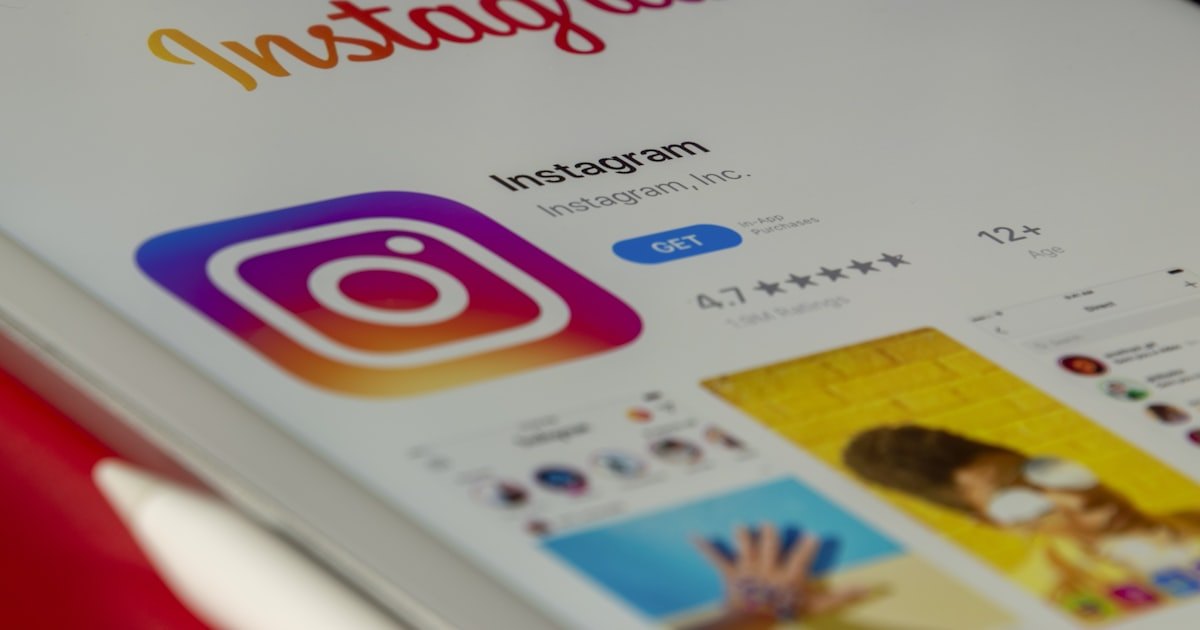
Meta’s newest AI culture fight lasted less than a week.
The company said it is discontinuing Muse Image, a new AI image feature that let people generate or alter images by drawing on content from public Instagram accounts, after a fast backlash from users, privacy advocates and performers’ union SAG-AFTRA. Meta launched the feature Tuesday as part of a broader rollout of Muse Image, its first image-generation model from Meta Superintelligence Labs, and had built it into the Meta AI chatbot. By Saturday, the feature was gone.
“Our intent was to provide a useful creative tool and to give people control over whether their public content could be referenced in this way,” Meta said in a statement reported by The Guardian. “We’ve heard the feedback that this feature missed the mark, so it’s no longer available.”
The technical move was small compared with Meta’s broader AI ambitions. The cultural signal was not. Muse Image touched the exact nerve running through public life in 2026: whether posting publicly means consenting to become a remixable data source, a visual prompt and a digital double for anyone else’s tool.
According to BBC News, the feature allowed users of Meta AI to tag public-facing Instagram accounts and quickly use content from those accounts to create AI-generated or altered images. Instagram users with public accounts were opted in by default, the BBC reported, meaning their likeness could be used without their knowledge or permission unless they found and changed the setting.
That default is why the story moved so quickly from product update to culture conflict. AI image tools are no longer just novelty generators. They are now identity tools, fan tools, harassment tools, labor tools and reputation tools. The same mechanic that lets a user make a playful image can also let someone pull a stranger, creator or actor into a scene they did not choose. That is not an edge case in the public imagination anymore. It is the context in which every new image model arrives.
SAG-AFTRA, the union representing actors and other media professionals, urged members and other Instagram users on Thursday to opt out of the feature. In a statement quoted by The Guardian, the union said “anything other than a clear and conspicuous opt-in for these types of uses of Instagram users’ images is unacceptable, and an utter miscalculation of public sentiment regarding the obvious dangers and harms inherent in such use.”
After Meta removed the feature, SAG-AFTRA welcomed the reversal. “With the dangers of nonconsensual digital replicas well known to all, a feature that encouraged that behavior is unwise,” a union spokesperson said, according to The Guardian. “We appreciate its discontinuance. It is the responsible thing to do.”
The union’s response matters because the fight over AI replicas has moved beyond Hollywood contract tables and into everyday platform design. Actors have a professional stake in controlling likeness, voice and performance. But the same concern now applies to influencers, journalists, teachers, students, activists, local business owners and ordinary public-account users whose faces and posts live in the semi-public layer of the internet.
For years, platforms trained users to think of “public” as a distribution setting: people could see the post, share it, comment on it and embed it. AI has changed the meaning of public. Public can now mean machinable. It can mean a photo is not just visible but actionable — a piece of source material that can be summoned, transformed and blended into new images by people who never asked the original subject.
Meta’s statement framed the feature as an attempt to give users control over whether their public content could be referenced. Critics saw the opposite problem: control came after the feature existed and after public users were automatically included. That sequencing is the cultural issue. When a platform launches first and asks users to protect themselves later, the burden shifts from the company building the tool to the people being turned into its material.
Privacy International, a London-based human rights charity, told the BBC that the feature was “the latest sign AI companies see people’s images and data as raw material to be exploited.” That critique lands because it describes a broader frustration with the AI rollout era: users are often asked to accept that data they produced for one social context can be repurposed for a different computational context.
The distinction matters. A person who posts a selfie on Instagram may understand that followers, strangers or brands can view it if the account is public. They may not understand that the image can become input for another user’s AI generation flow. Consent in social media has always been messy, but AI adds a new layer: the output may look like a new image, but its social meaning still attaches to the person whose likeness made it possible.
Muse Image also arrived at a moment when synthetic faces are becoming harder for ordinary users to read. A separate BBC report published Saturday on deepfake detection described research led by academics at the University of Aberdeen and Australian National University into whether people can be trained to spot AI-generated human faces. The researchers told the BBC that obvious tells, such as extra fingers or strange accessories, are becoming less reliable as models improve. Their training focused instead on subtler qualities such as symmetry, proportionality, expressiveness, distinctiveness and memorability.
That research does not directly evaluate Meta’s feature, and it should not be treated as proof of what Muse Image would or would not produce. But it helps explain the cultural backdrop. The harder synthetic images are to detect, the higher the stakes become for consent at the point of creation. Once an image circulates, the subject may have to fight context collapse, audience confusion and reputational harm after the fact.
Meta is not alone in facing that pressure. AI image systems across the industry are pushing into apps that were built around social identity rather than professional image editing. The more these tools become native to feeds, chats and profile-based platforms, the less they feel like separate creative software and the more they feel like a new layer on top of people’s lives.
That is why “opt in” versus “opt out” has become one of the most important cultural design choices in AI. An opt-in design treats likeness as permission-based. It asks the platform to earn participation. An opt-out design treats participation as the default and asks users to discover the risk, understand it and remove themselves. In practice, opt-out systems tend to advantage the company, because most users do not inspect every new setting. They also create a trust problem: even people who eventually opt out may feel the platform tried to use them first and inform them second.
For creators, the risk is not abstract. Public images are part of the job: headshots, behind-the-scenes posts, style cues, personal branding, fan interaction. A platform that makes those images more easily remixable can change the economics and safety of being visible online. For celebrities and actors, that can mean unauthorized replicas. For smaller creators, it can mean impersonation, sexualized edits, targeted harassment or simply the loss of control over how their image travels.
For non-famous users, the stakes can be just as personal. A public account does not necessarily mean a public life. People use public profiles for small businesses, school clubs, local politics, art projects, mutual aid, sports teams and community work. The fact that a post is visible to strangers does not mean the person in it wants to be invoked as an AI prompt.
That gap between legalistic platform assumptions and social expectations is where the backlash formed. Platforms often define permission through terms of service, account settings and product affordances. Users define permission through context: who the post was for, what it was meant to do, and what kinds of use feel reasonable. AI features expose how far apart those definitions can be.
Meta’s quick reversal suggests the company recognized that this feature had crossed a line users could describe immediately. The criticism was not only that AI exists, or that image editing is bad, or that public accounts should never be referenced by technology. It was that the company put a powerful generation feature close to real identities, made public-account participation automatic, and relied on users to opt out of a use case many had not imagined when they posted.
The speed of the response also shows how AI backlash has matured. A few years ago, concern over synthetic images was often treated as a niche worry for artists, celebrities or misinformation experts. Now, a new feature can trigger a coalition almost instantly: performers worried about digital replicas, privacy groups worried about data extraction, everyday users worried about being pulled into someone else’s content, and journalists tracking how platforms normalize AI defaults.
There is a practical lesson here for every social platform building AI into identity spaces: the trust threshold is higher than it used to be. A feature that can touch someone’s face, voice, likeness, child, home, workplace or social graph is not just a product improvement. It is a governance decision. The interface may look like creativity; the user experience may feel like surveillance or appropriation if consent is thin.
There is also a lesson for newsrooms and readers. The most important AI stories are not always the largest lawsuits, the biggest model releases or the most dramatic executive fights. Sometimes the defining story is a small setting in a mass-market app, because that is where the public learns what the AI economy thinks it can take for granted.
Muse Image’s removal does not settle the larger question. Meta told the BBC when it announced Muse Image that the tool was limited to Instagram for now, but that more AI features and integrations were planned for WhatsApp, Facebook and Messenger. The BBC also reported that Meta has an AI video tool in development. Meta declined to provide further comment to the BBC beyond its decision to pull the feature.
That means the cultural fight will repeat. AI image and video tools are moving toward the places where people already talk, flirt, organize, sell, perform and maintain relationships. Each rollout will force the same questions: Who is included by default? Who can use whose image? What counts as consent? What notices are clear enough? What harms are anticipated before launch rather than repaired after backlash?
For Meta, the immediate news is a product reversal. For users, the bigger story is a boundary test. The company tried to make public Instagram content more available to generative AI; enough people objected quickly enough that Meta walked it back. That is not a final victory for digital consent, but it is evidence that public sentiment has shifted. People are no longer only asking whether AI can make convincing images. They are asking who gets to decide when their image becomes part of the machine.
In culture terms, that is the actual headline. The internet spent two decades rewarding visibility. AI is now making visibility feel more expensive. Meta’s Muse Image backlash is a reminder that the public feed was never just data. It was people performing, working, remembering, marketing, mourning, joking, trying things on and being seen in context. Strip away that context and call it creative input, and the product may move fast. Trust does not.
Source notes
- The Guardian / Reuters: Meta statement, launch timing, SAG-AFTRA criticism and response, feature description. https://www.theguardian.com/technology/2026/jul/11/meta-ditches-muse-image-ai-feature-instagram-privacy
- BBC News: feature mechanics, default opt-in, Privacy International comment, Meta’s broader AI rollout context. https://www.bbc.co.uk/news/articles/c2dy6e8klw0o
- BBC News: context on the difficulty of identifying AI-generated human faces and the Aberdeen/ANU research described by BBC. https://www.bbc.co.uk/news/articles/c9d2wgvg55jo
The Shadowfetch Brief
Get The Shadowfetch Brief
Independent reporting, shared facts, and both sides - one short morning email. Free.
See a problem in this story? Report an error · Corrections policy · Our methodology