Digital Privacy2026-07-04 · 4 min read
Supreme Court Put Geofence Warrants on Notice
Supreme Court Put Geofence Warrants on Notice The Supreme Court did not ban geofence warrants, but it did something more durable for digital privacy: it rejected the idea that Amer

Supreme Court Put Geofence Warrants on Notice
The Supreme Court did not ban geofence warrants, but it did something more durable for digital privacy: it rejected the idea that Americans lose Fourth Amendment protection just because their phones share location history with a tech company.
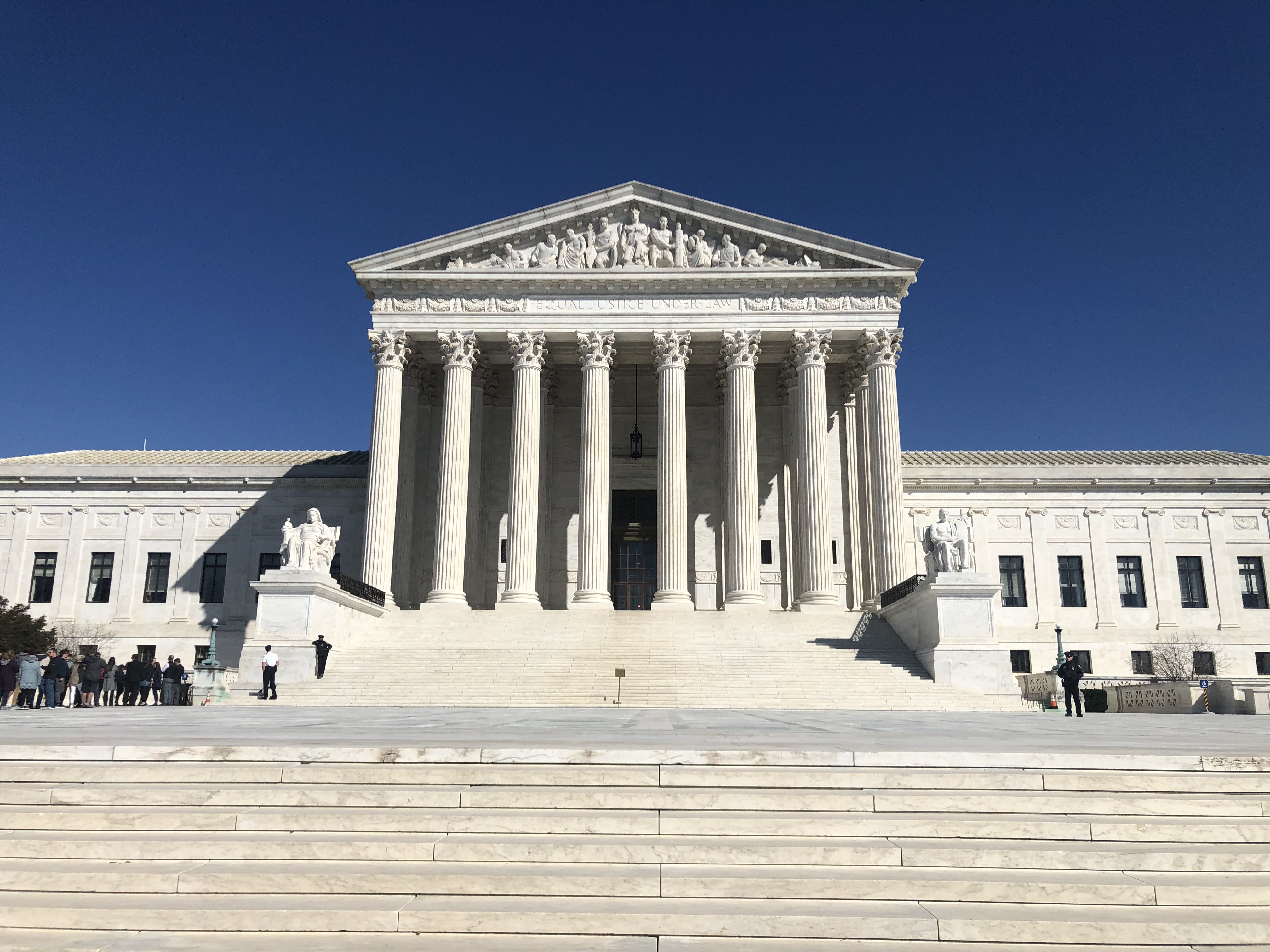
That is the practical meaning of Chatrie v. United States, the Court's June 29 decision that returned to the news cycle this week as legal and tech outlets digested what it means for police, Google, and anyone carrying a smartphone. The Week published a July 2 explainer on the decision, and the source document is the Court's own 72-page slip opinion. The image above is a Wikimedia Commons photo licensed under CC BY-SA 4.0.
Here is the short version: police used a warrant aimed at Google to identify phones near a Virginia credit union around the time of a 2019 robbery. That kind of order is called a geofence warrant. Instead of naming a suspect first, investigators draw a virtual perimeter around a place and time, then ask a platform to produce location records for devices inside it.
The government argued that this was not a Fourth Amendment search because the defendant, Okello Chatrie, had opted into Google's Location History. The Court disagreed. Justice Elena Kagan's majority opinion said police conducted a search when they obtained Chatrie's Location History data from Google, because a person has a reasonable expectation of privacy in cell-phone location information even when the data sits with a third-party company.
That matters because the phone in your pocket is not a loyalty card you casually hand to a cashier. It is a sensor bundle, calendar, map, camera, notebook, payment device, medical-adjacent tracker, and social life in one slab of glass. The law has been slow to admit what ordinary people already know: "location data" is not just a dot on a map. It can reveal worship, medical care, politics, addiction treatment, romance, work, and home.
The opinion gives readers one concrete data point worth sitting with. The Court described Google's Location History as recording a user's location "every two minutes or so," estimating position within about 20 meters, and sometimes showing elevation inside a building. That is not a blurry neighborhood-level hint. In many cases, that is the difference between outside a hospital and inside a particular wing.
The decision was 6-3, but it is not a total privacy victory lap. The Court did not decide whether the warrant in Chatrie's case was ultimately reasonable. It sent that question back to the Fourth Circuit, asking the lower court to look at whether each step of the warrant process satisfied probable cause and particularity.
That limitation is important. Police still have serious cases to solve. A violent robbery is not a privacy seminar. Investigators need lawful tools, and geofence warrants can be tempting when they have a crime scene but no suspect. The problem is that constitutional rights are built exactly for tempting moments. If the government can identify everyone near a bank, it can also identify everyone near a church, a union hall, a gun range, a protest, or a clinic.
The Court also cut into a stale government argument that deserves retirement: the claim that sharing data with a company means surrendering privacy against the state. That doctrine made more sense in the era of phone numbers dialed and bank slips deposited. It fits badly in a world where basic participation requires account creation, app permissions, cloud backups, and location prompts that most users cannot meaningfully audit.
For readers, the immediate takeaway is not "delete every app and move to a cabin." Good luck navigating July traffic with a paper map and purity. The smarter takeaway is narrower and more useful:
- Review whether Location History is enabled in your Google account.
- Check app-level location permissions on your phone.
- Use "while using" access where it makes sense.
- Treat location archives as sensitive records, not convenience exhaust.
The Chatrie ruling does not settle every geofence fight. It does set a boundary marker: when government turns a private platform's location archive into an investigative dragnet, the Fourth Amendment is in the room.
That is a welcome correction. In digital privacy, the hardest cases are not the ones where government openly kicks down the door. They are the ones where the door was quietly outsourced to a platform, and everyone insists that made the threshold disappear.
The Shadowfetch Brief
Get The Shadowfetch Brief
Stories like this — every side, one short morning email. Free.