
Health & Bio TechJul 14, 2026 · 11 min read
The Race to Make a Blood Test Catch Colon Cancer Earlier Just Got More Serious
Freenome’s updated AI-enabled colorectal cancer blood test improved detection of advanced precancerous lesions, raising the stakes for FDA review, Abbott’s screening strategy, and the future of less invasive cancer screening.

The Shadowfetch Brief
Get the free Daily Brief
The day’s biggest technology stories — one short morning email. Always free.
By Zara Desai
A new set of results from Freenome has sharpened one of the most consequential questions in cancer screening technology: can a routine blood draw become good enough to bring more people into colorectal cancer screening without giving up too much clinical accuracy?
The answer is still not a simple yes. Freenome’s SimpleScreen CRC test has not yet been cleared or approved by the Food and Drug Administration. A positive result from any noninvasive colorectal cancer screening test still needs follow-up colonoscopy. Blood tests are not a cure, not a replacement for medical judgment, and not a magic bypass around the hardest part of screening: making sure people get the right test, understand the result, and complete the next step.
But the company’s July readout is important because it points directly at the weakness that has kept blood-based colorectal cancer screening from fully matching the best-established options: finding dangerous precancerous lesions before they become cancer.
Freenome said its updated SimpleScreen CRC blood test met primary and secondary endpoints in a pivotal clinical validation study. The updated version showed 80.4% sensitivity for colorectal cancer and 18.2% sensitivity for advanced precancerous lesions, with 90% specificity among people with no findings on colonoscopy, according to the company. For lesions with high-grade dysplasia — a more concerning subgroup because those lesions are more likely to progress — sensitivity was 41.9%.
That is not colonoscopy-level prevention. It is not stool-test-level adenoma detection, either. But it is a meaningful jump from the first-generation SimpleScreen CRC results Freenome previously reported from PREEMPT CRC, where the company cited 81.1% cancer sensitivity, 13.7% sensitivity for advanced precancerous lesions, and 30.5% sensitivity for high-grade dysplasia after U.S. Census weighting. In plain English: the updated test appears to hold roughly similar cancer detection while improving its ability to flag some of the lesions clinicians most want to remove before cancer develops.
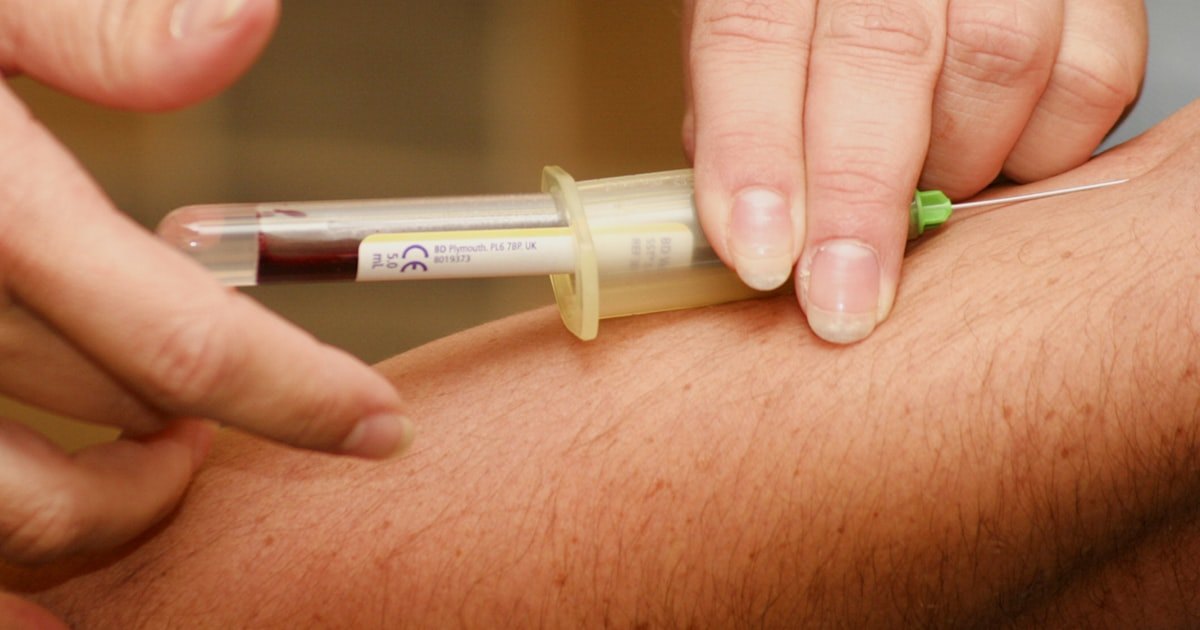
That is why this is a health-tech story, not just a biotech press release. The technology stack here is multiomic testing plus machine learning, aimed at moving cancer screening from a procedure-centered model toward a more ordinary clinical workflow: a blood draw, an algorithmic signal, and then a care pathway that has to be safe enough for real patients.
Why this matters now
Colorectal cancer is one of the clearest examples of a disease where screening can prevent death, but only if people actually get screened. The American Cancer Society recommends regular colorectal cancer screening for adults at average risk starting at age 45. Colonoscopy can both detect cancer and remove precancerous polyps, which is why it remains a central tool. Stool-based tests also have a long role in screening, particularly for people who do not want or cannot immediately access colonoscopy.
The gap is participation. Freenome says more than 50 million eligible U.S. adults are not up to date on recommended colorectal cancer screening. In its 2025 announcement of PREEMPT CRC results, the company said more than two out of five U.S. adults of screening age were not current with recommended screening. Different public-health datasets slice that problem in different ways, but the broad reality is stable: a test that is clinically useful but not completed does not help the patient sitting outside the screening system.
That is the opening blood-based screening companies are trying to fill. A blood draw can fit into an annual visit or routine lab workflow more easily than bowel prep, stool collection, time off work, transportation to a procedure, and sedation logistics. For people who decline colonoscopy or never return a stool test, a blood test could be a pragmatic entry point.
The American Cancer Society’s updated colorectal cancer screening guidance, as described by Freenome in May, recognized blood-based testing as an option for people who decline or do not complete other recommended approaches. The same update emphasized the key caveat: patients need to understand the pros, cons, and limits of blood-based testing, and a positive noninvasive test should be followed by colonoscopy.
That caveat is doing a lot of work. Screening is a system, not a single product. If a blood test produces a positive result and the patient cannot get a timely colonoscopy, the promise leaks out of the workflow. If a test misses too many precancerous lesions, it may detect some cancers earlier without preventing as many cancers as colonoscopy-centered strategies can. If false positives are too common, patients face anxiety, cost, and follow-up procedures without clear benefit.
So the technical question becomes very practical: can developers raise the sensitivity for early cancers and dangerous precursor lesions while preserving specificity high enough to avoid overwhelming patients and clinicians?
Freenome’s updated data are aimed squarely at that question.
What the new data say
The updated SimpleScreen CRC validation study used blinded, previously unevaluated samples from participants in PREEMPT CRC, along with previously tested samples, according to Freenome. PREEMPT CRC was a prospective registrational study conducted at more than 200 sites and enrolled 48,995 asymptomatic, average-risk adults ages 45 to 85 who were scheduled for screening colonoscopy.
Freenome reported that the updated analysis included more than 85 people with colorectal cancer, 1,500 with advanced precancerous lesions, and 150 with advanced precancerous lesions with high-grade dysplasia. Results were adjusted to the age and sex distribution of the U.S. Census to better reflect the intended-use population.
The headline numbers are:
- 80.4% sensitivity for colorectal cancer.
- 52% sensitivity for Stage I cases overall, including 39.9% for Stage I T1 and 81.2% for Stage I T2.
- 100% sensitivity for Stage II, 97.3% for Stage III, and 100% for Stage IV in the reported dataset.
- 18.2% sensitivity for advanced precancerous lesions.
- 41.9% sensitivity for advanced precancerous lesions with high-grade dysplasia.
- 90% specificity among people with no colonoscopy findings.
The advanced precancerous lesion number also needs context. An 18.2% sensitivity means the updated test still misses most advanced precancerous lesions. The reason the result matters is that it improved from the prior version and was accompanied by higher sensitivity in the high-grade dysplasia subgroup. For a screening tool positioned to reach people who otherwise would not screen at all, even partial improvement in lesion detection can matter — but it does not make the test equivalent to colonoscopy.
Freenome also cited modeling that projects the updated test would produce 1,582 additional life-years gained, 426 fewer colorectal cancer cases, and 143 fewer colorectal cancer deaths per 100,000 people screened compared with the first-generation test. Modeling can help compare strategies, but it depends on assumptions about adherence, follow-up colonoscopy completion, test intervals, cancer progression, and real-world access. Those assumptions deserve scrutiny before any broad public-health claim is treated as settled.
The Abbott factor
The commercial stakes are unusually visible. Abbott has an agreement with Freenome to bring SimpleScreen CRC to market if it gains FDA approval. Freenome said Abbott would exclusively commercialize and make the test available after approval. The companies also have a multi-year research and development program focused on improving assay performance.
That matters because Abbott is already a major player in diagnostics and, through its acquisition of Exact Sciences, has exposure to Cologuard, one of the best-known stool-based colorectal cancer screening brands. If SimpleScreen CRC is approved, Abbott would have a broader colorectal cancer screening portfolio: stool-based testing and blood-based testing, aimed at different patient preferences and access barriers.
MedTech Dive reported that Evercore ISI analysts said the new study results could set Abbott up as a dominant player in colorectal cancer screening. That is an analyst view, not a clinical conclusion, but it captures the market logic: the winner in this category may not be the single most accurate test in isolation. It may be the company that can combine sufficient performance, payer coverage, guideline acceptance, physician workflow, patient adherence, follow-up infrastructure, and commercial reach.
Freenome’s collaboration agreement includes a milestone tied to the study outcome. The company said the intended milestone payment will be set at $70 million, pending FDA approval of the next-generation test and successful technology transfer to Abbott.
That financial structure is another reason to keep the evidence and the excitement separate. The company has every reason to frame the readout as a major advance. Investors and analysts have every reason to read it through market share. Readers need the middle lane: what changed clinically, what remains unproven, and what would have to happen before this changes routine screening.
The AI part is not decoration
Freenome describes its platform as a multiomics approach that analyzes genomic, epigenomic, and proteomic biomarkers, including circulating tumor DNA, and applies artificial intelligence and machine-learning models to detect cancer-related signals in blood. The company has also described work with NVIDIA to accelerate AI and deep-learning initiatives for personalized multi-cancer detection.
This is the core health-tech layer. The hard problem is not simply whether cancer leaves traces in blood. It does. The hard problem is separating weak, noisy, early signals from background variation across age, sex, inflammation, benign disease, sample handling, and biology that differs from person to person. Screening tests also have to work in average-risk populations, where most people tested will not have the disease. That makes specificity crucial: a small drop in specificity can translate into many more false positives when applied at population scale.
Machine learning can help discover and weight patterns across multiple biomarker classes, but it also raises the bar for validation. Developers need to show performance in intended-use populations, not just curated case-control datasets. They need locked algorithms, transparent versioning, quality control, and evidence that performance holds across demographic groups and clinical settings. When companies improve an assay or algorithm, regulators and clinicians need to know whether the update is a small technical refinement or a materially different test.
Freenome’s plan reflects that reality. The company submitted a premarket approval application to the FDA in August 2025 for the first-generation SimpleScreen CRC test and said it expects the review to be completed in mid-2026. For the updated version, it intends to submit a supplemental PMA.
Until FDA review is complete, the most responsible phrasing is “promising,” not “practice-changing.”
What clinicians and patients still need to know
The next questions are not abstract. They are the questions that decide whether a screening technology helps people in the real world.
First, how will the test be positioned against existing options? If it is offered mainly to people who refuse colonoscopy and stool testing, the risk-benefit calculation may look different than if it competes directly with higher-performing established approaches.
Second, what will adherence look like outside a study? A blood draw is easier for many people, but easier does not automatically mean completed, repeated at the right interval, and followed by colonoscopy after a positive result.
Third, how will payers cover it? Guideline language, FDA approval, Medicare rules, and private insurance policies will shape whether the test becomes a broadly available screening option or a niche product.
Fourth, how will the test perform across groups that have historically faced colorectal cancer screening gaps? PREEMPT CRC’s large enrollment and diverse participation are strengths, but implementation can still widen disparities if access concentrates in well-resourced clinics.
Fifth, what happens after a negative result? Patients and clinicians need clear guidance on screening interval, residual risk, and when symptoms or family history should trigger a different pathway.
The most reader-safe takeaway is this: blood-based colorectal cancer screening is becoming more credible, but it is still a complement to a screening system, not a substitute for one. The technology may make the first step easier. The health outcome depends on the whole chain.
The bottom line
Freenome’s updated SimpleScreen CRC data are one of the sharper health-tech developments of the week because they move the field toward the metric that matters most for prevention: catching more high-risk precancerous lesions without losing too much specificity.
The test is still under FDA review. The improved lesion sensitivity is still limited. The modeling is not the same as observed population benefit. And any positive result still points back to colonoscopy.
Even with those limits, the direction is consequential. If blood-based tests can keep improving while fitting into ordinary clinical workflows, colorectal cancer screening could become less dependent on persuading every patient to start with the most burdensome option. That does not make the technology simple. It makes it worth watching carefully, with the hype filter on and the evidence ledger open.
Sources
- Freenome, “Freenome Reports Top-Line Readout of Updated SimpleScreen CRC Colorectal Cancer Screening Blood Test Met All Primary and Secondary Endpoints,” July 9, 2026.
- MedTech Dive, “Freenome colorectal cancer test data improve on earlier results,” July 13, 2026.
- BioPharma Dive, “Freenome colorectal cancer test data improve on earlier results,” July 13, 2026.
- Freenome, “Freenome Announces JAMA Publication of Data from Pivotal Study of its Blood-Based Test for Colorectal Cancer,” June 2, 2025.
- Freenome, “Freenome’s SimpleScreen CRC Blood-Based Test Included in Updated ACS Colorectal Cancer Screening Guideline,” May 27, 2026.
- American Cancer Society, colorectal cancer screening recommendations.
Shadowfetch is a technology publication. Explore Shadowfetch Linux — our own Linux build — and the Shadowfetch apps on the App Store.
How the story is being framed
- Colorectal cancer screening can prevent death when people complete it, and colonoscopy both detects cancer and removes precancerous polyps.
- Any positive noninvasive colorectal cancer screening test requires follow-up colonoscopy.
- Blood-based tests are positioned for people who decline or cannot complete colonoscopy or stool tests.
- Machine-learning multiomic blood tests must balance sensitivity for early lesions against specificity to limit false positives at population scale.
Updated blood testing could expand access to colorectal cancer screening for underserved populations by reducing procedural barriers.
Freenome’s updated blood test data show incremental gains in precancerous lesion detection while remaining under FDA review and requiring colonoscopy follow-up.
Commercial progress in blood-based colorectal cancer screening reflects market incentives to improve patient uptake without sacrificing core clinical performance metrics.
Shadowfetch’s read of how each side is framing this story — not the reporting itself. How we do this.
How we reported this
The article draws from Freenome’s July 9, 2026 company announcement of top-line study results, prior PREEMPT CRC data, and reporting in MedTech Dive and BioPharma Dive.
- company press release
- clinical study data
- direct reporting
The Shadowfetch Brief
Get The Shadowfetch Brief
Stories like this — every side, one short morning email. Free.
See a problem in this story? Report an error · Corrections policy · Our methodology