
Recipe of the DayJul 11, 2026 · 12 min read
Skillet Corn, Zucchini & Burst Tomato Pasta With Lemon Ricotta
A bright 35-minute summer pasta turns corn, zucchini, cherry tomatoes, basil, and lemon ricotta into an easy July dinner.

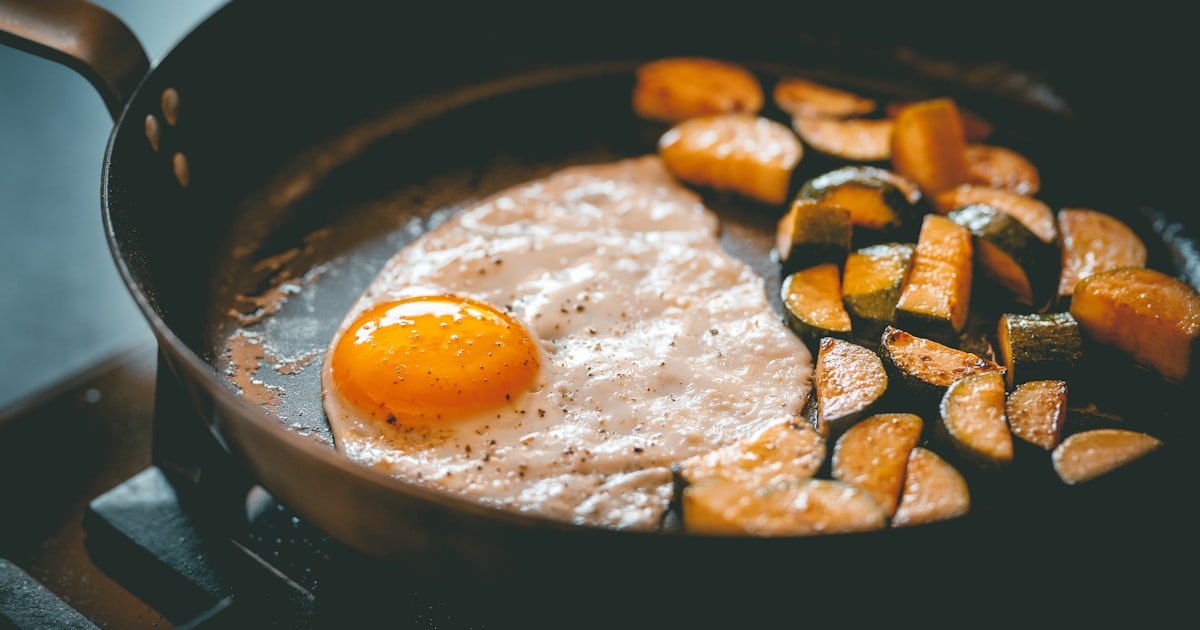
Recipe: Skillet Corn, Zucchini & Burst Tomato Pasta With Lemon Ricotta
Recipe of the Day for Shadowfetch Recipes — Saturday, July 11, 2026
Testing status: untested draft for editorial review; written from standard stovetop technique and food-safety guidance, not from a completed Shadowfetch test kitchen run.
This is the kind of July dinner that makes sense when the market bags are full but the kitchen is warm: sweet corn cut straight from the cob, zucchini browned at the edges, cherry tomatoes cooked just until they slump and shine, and a lemony spoonful of ricotta that turns the whole skillet creamy without asking you to stand over a sauce for half an hour. It is bright, fast, and forgiving — the beach-kitchen version of pasta night, with enough vegetables to feel like summer actually showed up for work.
The idea came from today’s seasonal scan using Shadowfetch’s non-Google research tools: July is prime time for corn, zucchini, tomatoes, basil, and stone fruit across a lot of U.S. markets, and the best Recipe of the Day move is not to overcomplicate that. We are keeping this family-friendly and non-alcoholic, using the pasta water as the sauce-builder and lemon as the lift. If your tomatoes are very sweet, the vinegar is optional. If your zucchini is enormous, scoop out the seedy middle before slicing. If dinner needs to be on the table in 35 minutes, this one behaves.
Quick facts
- Yield: 4 servings
- Prep time: 15 minutes
- Cook time: 20 minutes
- Total time: About 35 minutes
- Skill level: Easy
- Equipment: Large pot, large skillet, colander or spider, measuring cups/spoons, microplane or fine grater, chef’s knife, cutting board
- Best season: Mid-summer, when corn, zucchini, cherry tomatoes, and basil are at their sweetest
Ingredients
For the pasta and vegetables
- 12 ounces short pasta, such as fusilli, casarecce, penne, or shells
- 1 tablespoon kosher salt, for the pasta water, plus more to taste
- 2 tablespoons extra-virgin olive oil
- 2 medium zucchini, about 1 pound total, trimmed and cut into 1/2-inch half-moons
- 2 ears fresh corn, kernels cut from the cobs, about 1 1/2 cups kernels
- 1 pint cherry or grape tomatoes, about 10 ounces, halved if large
- 3 garlic cloves, thinly sliced
- 1/2 teaspoon fine sea salt, plus more to taste
- 1/4 teaspoon freshly ground black pepper, plus more to taste
- 1/4 teaspoon red pepper flakes, optional
- 1 tablespoon fresh lemon juice, plus more to taste
- 1 teaspoon finely grated lemon zest
- 1 teaspoon white wine vinegar or apple cider vinegar, optional, only if the tomatoes need a little brightness
- 1/2 cup packed fresh basil leaves, torn
- 1/4 cup grated Parmesan cheese, plus more for serving
For the lemon ricotta
- 3/4 cup whole-milk ricotta cheese, preferably made with pasteurized milk
- 1 tablespoon extra-virgin olive oil
- 1 teaspoon fresh lemon juice
- 1/4 teaspoon finely grated lemon zest
- 1/8 teaspoon fine sea salt
- 2 tablespoons reserved hot pasta water, plus more as needed
Before you start: a few small success cues
The only real trick here is giving the vegetables enough space and heat to taste cooked, not steamed. Zucchini carries a lot of water, so let it sit still in the skillet long enough to pick up golden spots. Corn only needs a couple of minutes; it should stay sweet and lightly crisp. Tomatoes are done when their skins wrinkle and their juices start to gather in the pan. The ricotta is not cooked hard — it is loosened with hot pasta water so it becomes a cool-creamy finish rather than a heavy sauce.
If your skillet is smaller than 12 inches, brown the zucchini in two batches. Crowding the pan is how summer vegetables become sad and squeaky. Nobody needs that on a Saturday.
Instructions
1. Bring the pasta water to a boil. Fill a large pot with about 4 quarts water and bring it to a rolling boil over high heat. Add 1 tablespoon kosher salt. The water should taste pleasantly seasoned, not bitter-salty.
2. Cook the pasta until just shy of al dente. Add the pasta and cook 1 minute less than the package’s al dente timing, usually 8 to 10 minutes depending on the shape. Before draining, scoop out at least 1 1/2 cups of the starchy pasta water. Drain the pasta but do not rinse it; the surface starch helps the sauce cling.
3. Brown the zucchini. While the pasta cooks, heat 2 tablespoons olive oil in a large skillet over medium-high heat until shimmering. Add the zucchini in a mostly single layer. Cook, stirring only every 2 minutes, until the pieces are golden in spots and just tender, 5 to 7 minutes. The zucchini should bend easily but not collapse.
4. Add the corn and tomatoes. Stir in the corn kernels, tomatoes, garlic, 1/2 teaspoon fine sea salt, black pepper, and red pepper flakes if using. Cook, stirring often, until the corn turns a brighter yellow, the garlic smells sweet instead of raw, and the tomatoes begin to burst and release juices, 4 to 5 minutes. Lower the heat if the garlic starts to brown sharply.
5. Build the skillet sauce. Add 1/2 cup reserved pasta water to the skillet and scrape up any browned bits from the bottom. Stir in the lemon juice and lemon zest. Simmer for 1 to 2 minutes, until the liquid looks lightly glossy and a little reduced. Taste a tomato; if the pan tastes flat or too sweet, add the optional teaspoon of vinegar.
6. Toss in the pasta. Add the drained pasta to the skillet and toss for 1 to 2 minutes over medium heat. Add another splash of pasta water, 2 tablespoons at a time, if the skillet looks dry. The pasta is ready when it is al dente, coated, and the vegetables are distributed through the curves and ridges.
7. Make the lemon ricotta. In a small bowl, stir together the ricotta, 1 tablespoon olive oil, 1 teaspoon lemon juice, 1/4 teaspoon lemon zest, and 1/8 teaspoon salt. Stir in 2 tablespoons hot pasta water until the ricotta is soft and spoonable. If it still looks stiff, add another teaspoon or two of pasta water.
8. Finish off the heat. Turn off the burner. Fold the basil and 1/4 cup Parmesan into the pasta. Taste and adjust with more salt, pepper, lemon juice, or pasta water as needed. The final texture should be saucy but not soupy.
9. Serve. Spoon the pasta into shallow bowls. Dollop the lemon ricotta over the top, then finish with a little more Parmesan, black pepper, and a few torn basil leaves. Serve warm, not piping hot, so the lemon and basil stay lively.
Doneness cues that matter
- Pasta: Slightly firm in the center when drained; fully al dente after it spends 1 to 2 minutes in the skillet.
- Zucchini: Golden on some edges, tender enough to spear with a fork, still holding its shape.
- Corn: Bright yellow, warm, and juicy; not dry or wrinkled.
- Tomatoes: Wrinkled, glossy, and starting to release juices.
- Sauce: Lightly creamy from starch and ricotta, not oily, not watery.
Storage and reheating
Cool leftovers promptly and refrigerate in a covered container within 2 hours of cooking, or within 1 hour if the room is very hot. Keep refrigerated at 40°F/4°C or below and use within 3 to 4 days.
To reheat, add a splash of water to loosen the pasta, then warm gently in a covered skillet over medium-low heat, stirring often, until steaming hot. For best food-safety practice with leftovers that include dairy, reheat to 165°F/74°C. You can also microwave in 45-second bursts, stirring between bursts, until evenly hot. Add fresh basil after reheating if you have it; basil darkens quickly once warmed.
This pasta is not ideal for freezing. The zucchini softens and the ricotta can turn grainy. If you need a freezer-friendly version, freeze only the cooked pasta and vegetable base without ricotta, then add fresh ricotta or Parmesan after reheating.
Food-safety notes
This recipe does not use meat, poultry, eggs, seafood, or alcohol. It does use dairy. Keep ricotta and Parmesan refrigerated until you are ready to use them, choose pasteurized dairy products when possible, and do not leave the finished pasta sitting out for extended periods. Use clean utensils for the cheese and avoid returning a spoon that touched served pasta back into the ricotta container. Wash produce under running water before cutting, including zucchini, tomatoes, lemon, and basil, and scrub corn if the husks are dirty before shucking.
Substitutions
- Pasta shape: Any short pasta with ridges or curves works. Long pasta is fine, but it will be a little harder to toss evenly with the vegetables.
- Corn: Use 1 1/2 cups thawed frozen corn when fresh corn is not good. Pat it dry before adding so it sautés instead of steaming.
- Zucchini: Yellow summer squash works one-for-one. For oversized squash, remove the seedy center and use the firmer outer flesh.
- Tomatoes: Chopped ripe tomato can replace cherry tomatoes. Use about 1 1/2 cups and cook just until juicy.
- Ricotta: Cottage cheese blended until smooth can work in a pinch. Mascarpone is richer; use 1/2 cup and loosen with extra pasta water.
- Parmesan: Pecorino Romano is saltier, so start with 2 tablespoons and adjust.
- Basil: Mint, parsley, or a mix of tender herbs can step in. Use a lighter hand with mint.
Dietary variations
1. Vegetarian: The recipe is vegetarian as written if your Parmesan is made with vegetarian rennet. Many traditional Parmesan-style cheeses use animal rennet, so check the label if that matters for your table.
2. Gluten-free variation: Use a sturdy gluten-free short pasta and reserve extra pasta water before draining. Gluten-free pasta can tighten as it sits, so toss with a little more water and olive oil. Check every ingredient label, including cheese and pasta, and consider your kitchen’s cross-contact risk; this is not a guarantee of allergen-free preparation.
3. Dairy-free variation: Skip the ricotta and Parmesan. Finish the pasta with 3 tablespoons olive oil, 1 tablespoon lemon juice, 1/4 cup toasted breadcrumbs made from dairy-free bread if tolerated, or 2 tablespoons nutritional yeast. Check labels for allergens and cross-contact, especially with packaged substitutes.
Allergen notes
Major allergens present as written: milk from ricotta and Parmesan, and wheat from standard pasta. Depending on the pasta brand, there may also be egg or soy cross-contact, so read labels closely. This recipe does not intentionally include peanuts, tree nuts, fish, shellfish, sesame, soy, or eggs, but Shadowfetch does not guarantee any recipe is allergen-free. For anyone with a severe allergy, use ingredients from trusted manufacturers and cook in a kitchen where cross-contact is controlled.
Modest nutrition ESTIMATE
Approximate per serving, based on 4 servings and standard pasta, whole-milk ricotta, Parmesan, and 2 tablespoons olive oil in the skillet: about 500 calories, 18 g protein, 72 g carbohydrates, 16 g fat, 5 g fiber, and 620 mg sodium. These numbers are estimates, not lab analysis or medical advice. Actual nutrition will vary with pasta shape, cheese brand, how much salt the pasta absorbs, and serving size.
Serving ideas
This is enough for a light dinner on its own, especially if the corn is sweet and the bowls are generous. If you want something alongside it, keep it simple: a cucumber salad with lemon, sliced peaches, or grilled bread rubbed with tomato. For a bigger table, serve it with a platter of melon, a crisp green salad, and sparkling water with citrus. No drama, no tiny garnish tweezers, just a good July bowl.
Photo guidance and alt text
- Hero image: Shallow bowl of corn, zucchini, and burst tomato pasta with visible lemon ricotta dollops, basil, and black pepper. Natural window light, bright but not blown out.
- Process shot: Skillet with browned zucchini, corn, and tomatoes just beginning to burst.
- Alt text: “A bowl of summer pasta with corn, zucchini, burst cherry tomatoes, basil, and lemon ricotta.”
Recipe schema draft
json
{
  "@context": "https://schema.org",
  "@type": "Recipe",
  "name": "Skillet Corn, Zucchini & Burst Tomato Pasta With Lemon Ricotta",
  "description": "An easy summer pasta with fresh corn, zucchini, cherry tomatoes, basil, and lemon ricotta.",
  "recipeCategory": "Dinner",
  "recipeCuisine": "American",
  "prepTime": "PT15M",
  "cookTime": "PT20M",
  "totalTime": "PT35M",
  "recipeYield": "4 servings",
  "keywords": "summer pasta, corn pasta, zucchini pasta, tomato pasta, vegetarian dinner",
  "recipeIngredient": [
    "12 ounces short pasta",
    "1 tablespoon kosher salt, for pasta water",
    "2 tablespoons extra-virgin olive oil",
    "2 medium zucchini, cut into 1/2-inch half-moons",
    "2 ears fresh corn, kernels cut from cobs",
    "1 pint cherry or grape tomatoes",
    "3 garlic cloves, thinly sliced",
    "1/2 teaspoon fine sea salt",
    "1/4 teaspoon black pepper",
    "1/4 teaspoon red pepper flakes, optional",
    "1 tablespoon fresh lemon juice",
    "1 teaspoon lemon zest",
    "1 teaspoon white wine vinegar or apple cider vinegar, optional",
    "1/2 cup fresh basil leaves",
    "1/4 cup grated Parmesan cheese",
    "3/4 cup whole-milk ricotta cheese",
    "1 tablespoon extra-virgin olive oil for ricotta",
    "1 teaspoon lemon juice for ricotta",
    "1/4 teaspoon lemon zest for ricotta",
    "1/8 teaspoon fine sea salt for ricotta",
    "2 tablespoons reserved hot pasta water"
  ],
  "recipeInstructions": [
    "Boil salted water and cook pasta 1 minute shy of al dente; reserve pasta water and drain.",
    "Brown zucchini in olive oil until golden in spots and just tender.",
    "Add corn, tomatoes, garlic, salt, pepper, and optional red pepper flakes; cook until tomatoes begin to burst.",
    "Add pasta water, lemon juice, and zest; simmer briefly to make a glossy skillet sauce.",
    "Toss in pasta until al dente and coated.",
    "Stir ricotta with olive oil, lemon, salt, and pasta water until spoonable.",
    "Finish pasta off heat with basil and Parmesan; serve with lemon ricotta."
  ],
  "nutrition": {
    "@type": "NutritionInformation",
    "calories": "about 500 calories per serving"
  }
}
Verification Notes
- Seasonal context gathered today with
/home/rtx5060ti/.hermes-shadowfetch/bin/research.pyand/home/rtx5060ti/.hermes-shadowfetch/bin/searx.py; Google search was not used. - Recipe is clearly labeled as a Recipe and marked as an untested draft; no claim of test-kitchen validation is made.
- Ingredient quantities, yield, timing, doneness cues, storage, reheating, allergen notes, substitutions, dietary variations, and nutrition estimate are included.
- Food-safety guidance covers dairy handling, produce washing, refrigeration at 40°F/4°C or below, prompt cooling, and reheating leftovers to 165°F/74°C.
- Nutrition is labeled ESTIMATE and contains no medical, weight-loss, detox, or disease claims.
- No affiliate links, sponsored ingredients, paid placements, or alcohol are included.
- Human editor should verify final CMS formatting, rights-cleared imagery, and any local house style before publication.
The Shadowfetch Brief
Get The Shadowfetch Brief
Stories like this — every side, one short morning email. Free.
See a problem in this story? Report an error · Corrections policy · Our methodology