
Science & ClimateJul 10, 2026 · 8 min read
EPA Moves to Loosen Pollution Limits on Heavy-Duty Trucks, Reversing Biden-Era Standards
The Trump administration's EPA is rolling back smog-forming emissions rules for trucks, a move with direct consequences for air quality, public health, and environmental justice in freight corridors nationwide.

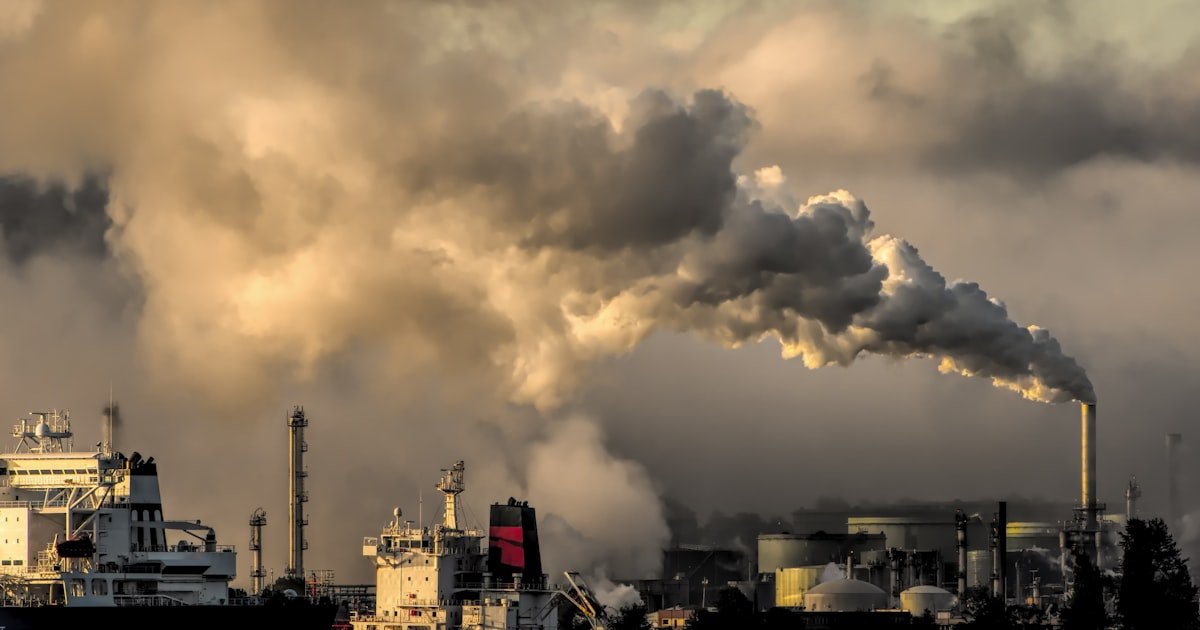
July 10, 2026 — The U.S. Environmental Protection Agency under the Trump administration has initiated steps to roll back federal emissions standards for heavy-duty trucks, targeting smog-forming pollutants that the previous administration had tightened to address air quality and public health impacts. The proposed changes, signaled in recent regulatory notices and reported through environmental monitoring channels, would ease requirements on nitrogen oxides and particulate matter from commercial vehicles, marking a significant shift in federal climate and air policy.
The move focuses on reversing aspects of rules finalized in 2023 and 2024 under President Biden that aimed to cut emissions from trucks, buses, and other heavy-duty vehicles by up to 80 percent for certain pollutants by model year 2027 and beyond. Those standards were designed to align with stricter California rules and international benchmarks while delivering measurable reductions in ground-level ozone and fine particulate pollution, which disproportionately affect communities near highways, ports, and freight corridors.
Background on the Biden-Era Standards
The Biden administration's EPA finalized the "Clean Trucks Plan" in two phases. The first phase, released in December 2022 and effective for 2027 model years, set new limits on nitrogen oxides (NOx) and particulate matter (PM) from heavy-duty engines. A second phase addressed greenhouse gas emissions. The rules were projected to prevent thousands of premature deaths and reduce asthma attacks and other respiratory illnesses, particularly in low-income and minority neighborhoods located along major trucking routes.
Environmental groups and public health advocates hailed the standards as long-overdue progress. The American Lung Association and the Union of Concerned Scientists cited modeling showing that the reductions would deliver $280 billion in health and climate benefits over three decades, including avoided hospital visits and lost workdays.
Industry pushback was immediate. Trucking associations, engine manufacturers, and some states argued that the timelines were unrealistic, costs would be passed to consumers through higher freight rates, and that supply chain constraints on advanced aftertreatment technology could disrupt deliveries. Several lawsuits challenged the rules in federal court, with petitioners claiming the EPA exceeded its statutory authority under the Clean Air Act.
The Current Rollback Proposal
Documents and announcements indicate the current EPA is preparing a notice of proposed rulemaking to loosen or delay portions of those standards. The focus is on NOx and PM limits for heavy-duty vehicles, with the agency citing concerns over feasibility, economic impacts on the freight sector, and the need to prioritize energy production and national security in regulatory decisions.
The administration has framed the action as correcting regulatory overreach that threatened American manufacturing and logistics efficiency. Officials have pointed to recent data on truck fleet turnover, supply chain pressures, and the availability of compliant engines as justification for revisiting the timelines and stringency levels.
This development aligns with broader administration priorities to reduce what it describes as burdensome federal mandates on domestic industry. Similar reviews have been announced or completed for power plant rules, vehicle tailpipe standards for light-duty cars, and methane regulations.
Science of the Pollutants at Stake
Heavy-duty diesel trucks are among the largest mobile sources of NOx and PM2.5 in the United States. NOx reacts in the atmosphere with volatile organic compounds to form ground-level ozone, the main component of smog. Fine particulate matter penetrates deep into lungs and bloodstreams, contributing to cardiovascular disease, lung cancer, and premature mortality.
The EPA's own Integrated Science Assessment for Oxides of Nitrogen and the 2019 PM Integrated Science Assessment document clear causal relationships between these pollutants and adverse health outcomes. Children, older adults, and people with pre-existing conditions face elevated risks when living or working near high-traffic corridors.
Climate implications are also significant. While the rollback primarily targets criteria pollutants rather than carbon dioxide, NOx reductions have co-benefits for short-lived climate forcers and overall air quality improvements that support adaptation to warming temperatures. Diesel particulate also contains black carbon, a potent short-term climate warmer.
Ocean and atmospheric scientists have additionally noted that NOx emissions contribute to nitrogen deposition in coastal waters, exacerbating eutrophication and harmful algal blooms in sensitive marine ecosystems.
Community and Environmental Justice Dimensions
The original Biden standards were developed with explicit attention to environmental justice. The EPA's analysis identified 75 million people living in counties that would see air quality improvements, with disproportionate benefits for Black, Latino, and low-income populations who experience higher baseline exposure to truck-related pollution.
Freight hubs in Southern California, the Gulf Coast, the Midwest, and the Northeast were projected to see the largest gains. Community organizations in places like the Ports of Los Angeles and Long Beach, Houston, and Chicago had advocated strongly for the tighter limits, citing local asthma rates and cancer clusters.
A rollback would likely preserve or increase those exposure disparities, according to preliminary assessments by environmental justice groups. Advocates argue that states and localities may respond with their own rules, but federal preemption under the Clean Air Act limits the scope of state action for new engines.
Industry and Economic Context
The trucking industry has undergone rapid change in recent years. Fleet operators are already navigating the shift toward natural gas, battery-electric, and hydrogen fuel cell trucks, alongside stricter state-level rules in California and other states that adopted the Advanced Clean Trucks regulation.
Engine makers such as Cummins, PACCAR, and Daimler Truck have invested heavily in selective catalytic reduction and other aftertreatment technologies to meet the 2027 standards. A federal rollback could reduce the market pressure for those investments and create uncertainty for companies that have already begun retooling production lines.
Freight rates, fuel costs, and driver shortages remain top concerns for the sector. The American Trucking Associations has welcomed the review, arguing that overly aggressive federal timelines compound existing challenges.
At the same time, some large shippers and logistics firms have begun requiring lower-emission fleets as part of corporate sustainability commitments. A weaker federal floor could accelerate a two-tier market where premium customers demand cleaner trucks while others default to older, dirtier equipment.
Regulatory Timeline and Legal Outlook
The EPA is expected to publish a proposed rule in the coming months, followed by a public comment period. Any final rule would likely face immediate legal challenges from environmental organizations and supportive states. Previous EPA attempts to weaken vehicle standards have been blocked or narrowed by courts citing the agency's obligation to protect public health under the Clean Air Act.
The Supreme Court's 2024 decision in Loper Bright Enterprises v. Raimondo, which overturned Chevron deference, has already altered the landscape for regulatory litigation. Courts will now exercise independent judgment on questions of statutory interpretation, potentially making it harder for the agency to justify major reversals without clear congressional authorization.
California and other states that have adopted stricter standards under Clean Air Act Section 209 waivers may continue enforcing their own rules for vehicles sold in those jurisdictions, creating a patchwork that manufacturers have long sought to avoid.
International Comparisons
The United States is not alone in tightening heavy-duty vehicle standards. The European Union implemented Euro VI standards years ago and is moving toward Euro VII, which includes even stricter limits on NOx, PM, and ammonia. China has adopted China VI standards modeled on Euro VI. India is phasing in Bharat Stage VI norms.
A U.S. rollback could affect global competitiveness for American engine and truck exporters and influence negotiations over harmonized international standards through the United Nations Economic Commission for Europe.
Public Health and Climate Tradeoffs
Health economists estimate that each ton of NOx reduced from heavy-duty vehicles avoids between $10,000 and $30,000 in health damages, depending on location and population density. Particulate reductions carry even higher valuations because of their direct toxicity.
On the climate side, the transportation sector accounts for roughly 28 percent of U.S. greenhouse gas emissions, with heavy-duty trucks responsible for about 7 percent of total emissions despite comprising a small share of the vehicle fleet. While the current rollback does not directly alter CO2 standards, the administration has separately signaled interest in revisiting greenhouse gas rules for trucks.
What Comes Next
The EPA has not yet released the full text of the proposed rollback or a detailed regulatory impact analysis. Environmental organizations are preparing technical comments and litigation strategies. Industry groups are organizing support for the changes. State attorneys general in both red and blue states are watching closely, as are investors in clean technology and traditional diesel supply chains.
For communities living alongside America's busiest freight corridors, the outcome will determine whether the air they breathe continues to improve or whether recent gains in pollution reduction stall. For the broader scientific and policy community, the episode offers another data point in the long-running debate over how aggressively federal regulators should use existing statutory authority to address cumulative environmental and health burdens.
The science on the health effects of NOx and PM remains robust. The policy question is how much weight to give those effects relative to other economic, logistical, and political considerations. The coming months of rulemaking and litigation will test where that balance ultimately lands under the current administration.
Sources for this article include EPA regulatory documents referenced in public notices, analyses from the American Lung Association, Union of Concerned Scientists, American Trucking Associations, and reporting aggregated through Shadowfetch research tools drawing on government announcements and environmental monitoring feeds as of July 10, 2026.
The Shadowfetch Brief
Get The Shadowfetch Brief
Stories like this — every side, one short morning email. Free.
See a problem in this story? Report an error · Corrections policy · Our methodology