 Shadowfetch
ShadowfetchNews reportTechnology
The Fourth of July drone crackdown just made local surveillance feel ordinary
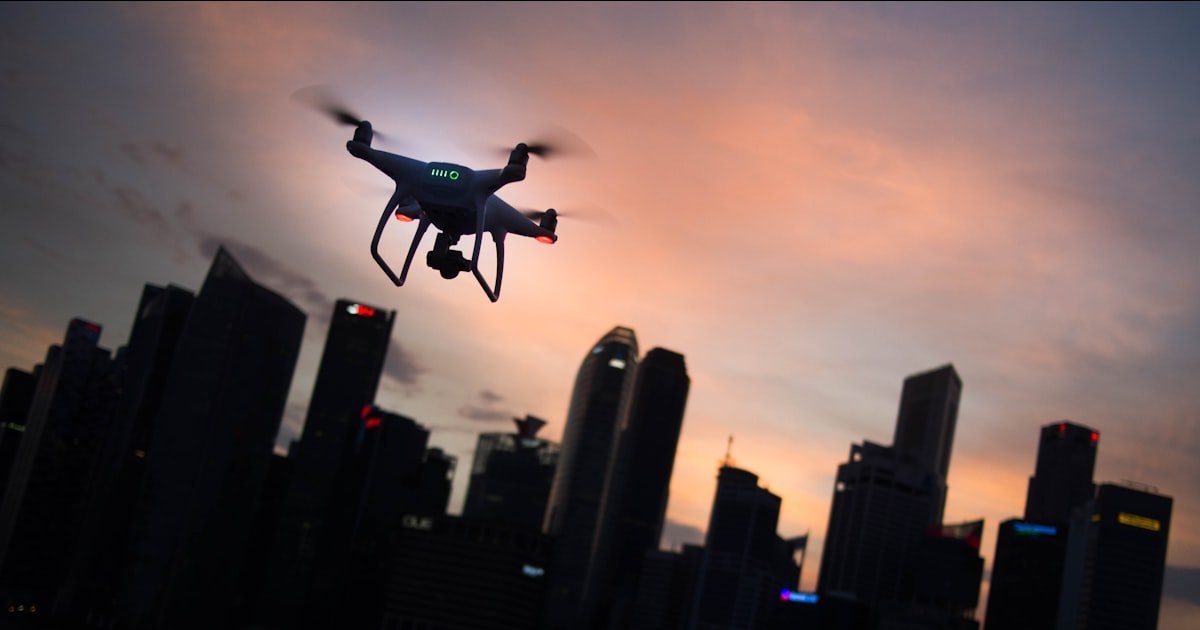
Cities used drones to turn illegal-fireworks enforcement into a high-dollar, high-visibility test of how ordinary local aerial surveillance is becoming.

By Amara Diallo
The most revealing technology story of the holiday week did not come from a keynote stage, a chip factory or a giant AI model. It came from a hovering camera over a Sacramento neighborhood, where fire officials say drone footage helped support a $100,000 illegal-fireworks citation after America’s 250th Independence Day.
Sacramento Fire Department officials issued 70 citations on July 4 totaling about $300,000 in fines, according to CBS News Sacramento and KCRA 3. One enforcement action in the Del Paso Heights area was tied to what officials described as repeated illegal fireworks activity near a home. Sacramento Fire Captain Justin Sylvia told KCRA that drone footage was clear enough to read address numbers and that crews could identify where fireworks were being launched.
That makes the episode more than a holiday nuisance story. It is a live example of how small drones are moving from emergency response and special-event monitoring into routine neighborhood enforcement, often with public agencies presenting the shift as practical, efficient and safety-driven.
The safety argument is real. Illegal fireworks start fires, injure people, frighten pets and veterans, create smoke and noise, and can turn one reckless gathering into a neighborhood emergency. But the technology story is real too: cities are learning that drones can document activity from above, help assign liability to property owners, support very large fines and then be repackaged as social-media proof that “we are watching.”
That is the line readers should see clearly. Public-safety drones are no longer just tools for search-and-rescue scenes, wildfires or barricaded suspects. They are becoming a visible part of local code enforcement.
What happened in Sacramento
Sacramento’s case is unusually concrete because officials gave numbers. CBS News Sacramento reported that the department used its own drones this year, after relying last year on drone operators provided by TNT Fireworks. Fire officials said the in-house program gave them more flexibility on one of the busiest nights of the year.
KCRA reported that Sacramento fire officials described one gathering where they watched and counted illegal fireworks with a drone. The station quoted Sylvia saying the drone surveillance footage was “crystal clear” and that the devices were advanced enough to read address numbers. The department’s holiday citations totaled roughly $300,000 on July 4 alone, with officials still reviewing evidence from July 2 and July 3.
The penalty structure matters because it shows how a hovering camera can become a bill with real household consequences. Sacramento Metropolitan Fire District’s public fireworks guidance says Sacramento County penalties start at $1,000 for each device, rise for additional devices within one year, and can reach $10,000 when illegal fireworks are used at schools, parks or within the American River Parkway. The district also warns that criminal charges may apply when illegal fireworks cause fire, property damage or bodily injury.
In other words: if a drone can count devices and tie them to a location, it can also help turn a short burst of activity into a very large administrative penalty.
Sacramento was not alone. Ars Technica reported Friday that more cities and towns deployed drones over the Fourth of July weekend, often pairing enforcement with public-facing videos meant to deter future violations. The article pulled together cases from Sacramento, Salinas, Anaheim, Santa Ana, La Habra, Riverside, Lewisville, Texas, and Renton, Washington.
That spread is the story. A technology once treated as specialized is becoming municipal muscle memory.
Southern California turned drones into a holiday enforcement layer
Southern California’s use of drones around July 4 is especially important because it shows how fast the practice is normalizing in dense neighborhoods.
The Orange County Register reported that Anaheim police used drones to help issue 40 citations and confiscate 2,500 pounds of illegal fireworks. Santa Ana police also deployed drones this year, with drones assisting in 107 citations, according to the same reporting cited by Ars Technica. Santa Ana’s citations were issued to property owners at addresses where illegal fireworks activity took place, not necessarily to a specific person caught lighting a fuse.
That distinction is not a small footnote. It is the governance question inside the gadget story. Drones can identify a location from the sky; they do not automatically answer who bought the fireworks, who lit them, whether a landlord knew anything, or whether a homeowner had control over a large gathering. Local law may allow property-based citations, but residents should understand that the technology can shift enforcement from “who did it?” toward “where did it happen?”
La Habra police posted drone footage of a person lighting a firework in a residential street and said its drone unit helped with numerous citations and some arrests, according to Ars. Riverside police have also linked increased citations to drone deployments that began in 2025, while other California cities — including Downey, Artesia, Brea, San Bernardino, Stanton, Chino, Hemet and San Jose — were listed by the Los Angeles Times as using drones over the holiday.
This is not a one-city experiment. It is a regional pattern.
And because many of these deployments were promoted through Instagram reels, Facebook videos and local TV segments, the drone is doing two jobs at once. It gathers evidence for enforcement, and it becomes a public relations object: a flying warning label over the block.
Why public agencies are reaching for drones
The practical appeal is obvious. A drone can move across an area faster than a patrol car trapped in holiday traffic. It can capture video without placing firefighters or police directly in the middle of a volatile crowd. It can document a scene after a fire, explosion or injury. It can also cover more addresses than a small enforcement team could reach on foot.
For fire departments, that matters. Illegal fireworks enforcement is not just about nuisance calls. Dry vegetation, dense housing and heat can turn fireworks into structure fires or brush fires. A department that can identify launch points may be able to stop repeat activity before a spark becomes a dispatch avalanche.
Some communities are also using drones as substitutes for fireworks shows, with coordinated light displays that reduce smoke, noise and fire risk. That is a different use of the same broad technology family: drones as celebration infrastructure instead of enforcement infrastructure.
But the enforcement side is expanding because the regulatory path has become easier. The Electronic Frontier Foundation, in a 2025 review of “drone as first responder” programs, said the Federal Aviation Administration finalized reworked requirements in May that led to a flood of waiver requests for operations beyond an operator’s visual line of sight. EFF cited an FAA spokesperson saying that, in the first two months of the new process, the agency had approved 410 such waivers — already about a third of the roughly 1,400 drone-as-first-responder waivers ever granted.
That does not mean every July 4 fireworks drone was flying beyond visual line of sight. But it does show the national direction: public agencies want drones to get airborne faster, cover more ground and become standard response tools.
The scale is already large. EFF’s Atlas of Surveillance database lists more than 1,800 U.S. police departments and sheriff’s offices operating drones. That count is not limited to fireworks enforcement, but it gives readers the baseline: drones are now common in local public safety, not rare.
The civil-liberties issue is not hypothetical
The cleanest version of the pro-drone argument is this: illegal fireworks are dangerous, traditional enforcement is hard, and aerial video can help prove violations without sending responders into unsafe situations.
The cleanest version of the civil-liberties concern is this: once a city has a flying camera program, the same hardware can move across use cases much faster than public debate does.
EFF senior investigative researcher Beryl Lipton put the concern plainly in the organization’s review: flying cameras can record homes, backyards and movements, and should require clear policies around retention, audits and use, including when cameras should not be recording. EFF also warned that drones can be paired with thermal cameras, automated deployment systems, real-time crime centers and other surveillance tools.
That is the part of the story that should not get buried under holiday outrage. A drone flying over illegal fireworks may feel socially acceptable to many neighbors who are tired of smoke, explosions and fire risk. But the precedent created on a night of obvious nuisance can shape what feels normal on a quieter Tuesday.
There are basic questions every city using drones for holiday enforcement should answer publicly:
- Who authorizes a drone flight, and under what standard?
- Is the drone recording continuously, or only when a suspected violation is visible?
- How long is footage retained when no citation or arrest results?
- Can footage be searched later for unrelated violations?
- Are property owners cited based solely on location, or must officials identify a responsible person?
- Does the public get aggregate data on flights, citations, complaints, false positives and appeals?
- Are drone videos used for deterrent social media posts edited to avoid exposing bystanders, children, license plates or unrelated homes?
The technology is outpacing the policy conversation
The Fourth of July crackdown also shows a familiar pattern in local technology adoption: a tool arrives framed around a hard problem, then expands before the public has a full policy vocabulary for it.
Body cameras followed that path. License-plate readers followed that path. Real-time crime centers are following that path now. Drones are not identical to those systems, but they share a core governance problem: collection is easy, oversight is slower, and the people most affected often learn about the program through a press release or a viral video after the fact.
In Sacramento, officials can point to actual fire risk and actual citations. In Anaheim and Santa Ana, agencies can point to confiscated fireworks and large call volumes. In Lewisville, Texas, Ars reported that police said people stopped and cleared out after a drone arrived at some fireworks incidents. Those are measurable operational wins.
But operational wins do not settle the policy. They create the need for policy that matches the scale of the tool.
The strongest local drone programs will not be the ones with the flashiest sizzle reels. They will be the ones with written rules that residents can understand before the drone takes off: purpose limits, data-retention limits, audit logs, appeal paths, public reporting and real consequences for misuse.
There is also an equity dimension. Fireworks enforcement often plays out in working-class neighborhoods where residents may have less ability to contest a citation, absorb a fine or hire counsel. A $1,000 penalty is not abstract for a household living close to the edge. A $100,000 citation can be financially devastating. If cities are going to use aerial surveillance to support penalties of that size, they need unusually clear standards for evidence, notice and appeal.
That does not mean cities should ignore illegal fireworks. It means the burden of proof should rise with the burden placed on the resident.
What to watch next
The immediate news is that drones helped turn July 4 fireworks enforcement into a high-dollar, high-visibility operation in multiple cities. The bigger tech story is that local government is discovering how useful drones are for ordinary enforcement — and how politically easy they can be to justify when the target behavior is unpopular.
Readers should watch three things now.
First, whether fire and police departments publish after-action reports with more than highlight reels. The public needs numbers: flights, neighborhoods covered, complaints received, citations issued, arrests, fires prevented, footage retained and appeals filed.
Second, whether local councils treat drone programs as surveillance policy, not just equipment purchases. A drone is not merely a camera with propellers. It is a mobile sensor platform that can be integrated into other systems.
Third, whether cities use drones to replace some fireworks displays, not just police them. If drones can reduce fire risk as entertainment, that is a different civic bargain from using them mainly as enforcement eyes in the sky.
The Fourth of July has always been messy: civic ritual, noise complaint, fire hazard and neighborhood party all at once. This year added another layer. Above the smoke and sparks, local government had a clearer view than ever.
The question now is whether residents get a clear view back.
The Shadowfetch Brief
Get The Shadowfetch Brief
Independent reporting, shared facts, and both sides - one short morning email. Free.
See a problem in this story? Report an error · Corrections policy · Our methodology