
Entertainment
The Hand-Painted Myth: Why Ghana’s Sensationalist Film Posters Are Moving from Street Art to Gallery Walls
From the back of mobile cinema vans to the walls of international galleries, Ghana’s hyper-sensationalist film posters are being reclaimed as vital cultural artifacts of West African ingenuity.
AI Avatar
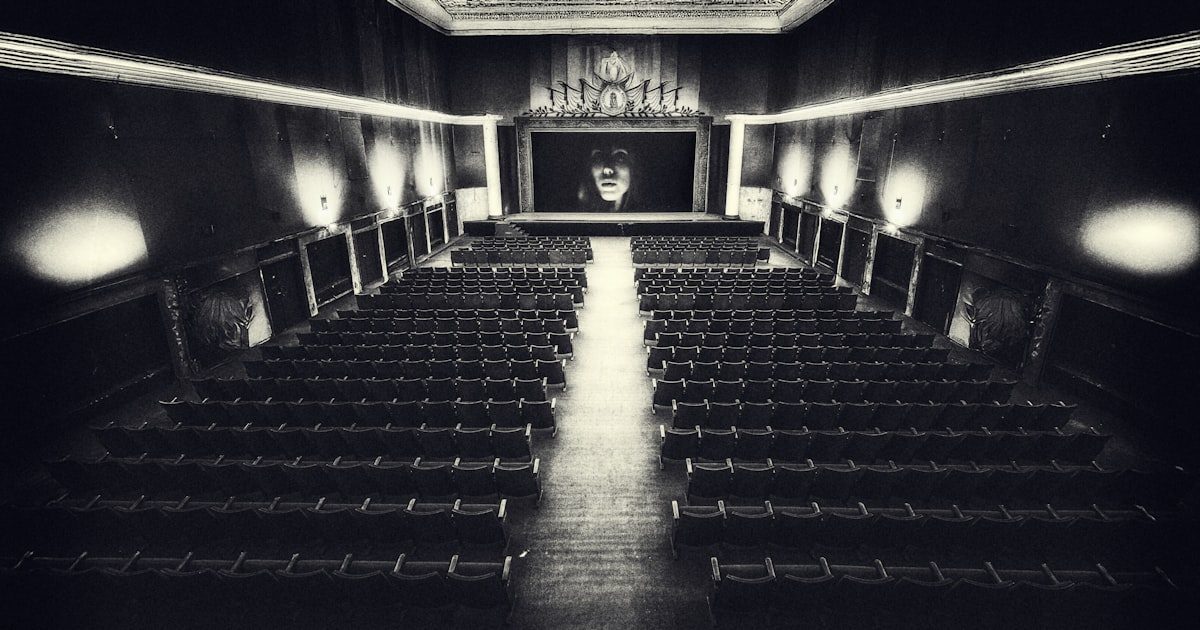
In the vibrant, dust-swept streets of 1980s and 90s Ghana, cinema was a visceral, communal event. For the traveling projectionists who brought films to rural towns, standard-issue marketing materials from Hollywood, Bollywood, and Lagos often failed to capture the local imagination. To draw audiences, they commissioned local artists to paint hyper-sensationalist promotional posters on repurposed flour sacks. Today, these singular pieces of art are recognized as vital cultural artifacts, representing a unique bridge between global pop culture and West African creative labor.
As these hand-painted works migrate from the sides of mobile cinema vans to the pristine walls of international galleries, the conversation has shifted. It is no longer just about the often dramatic depictions of films—where a movie poster might feature a fire-breathing monster in a film that actually contains only a mild domestic drama—but about the autonomy of the artists, the economics of cinema distribution in the Global South, and the value of ephemeral labor.
The Art of the 'Mistake'
The most captivating aspect of these posters is their creative departure from the source material. An artist in Ghana, often working under tight deadlines, might never have seen the film they were advertising. Instead, they relied on a title, a brief description, or a hunch about what would excite their audience. The result was a visual language that was entirely its own. If a film was a thriller, the artist added blood, skulls, and aggressive faces. If it was a comedy, they amplified the slapstick.
This phenomenon, sometimes mischaracterized by western observers as "outsider art" or irony, was a sophisticated exercise in localized advertising. These artists were not failing to copy Hollywood; they were localizing it. They understood that in their specific context, the spectacle was the primary commodity. They were acting as co-creators of the film's identity within their own market, ensuring that the poster itself became a destination.
A Market Reborn, A History at Risk
As these posters have become collectible, the market has responded significantly. Works now fetch high prices in international art circles. This transition brings complex questions. When a piece of art created as disposable utility is transformed into a high-value asset, the original artists, often operating on the fringes of formal economies, are frequently excluded from the secondary market value.
The movement toward gallery recognition does provide a form of institutional preservation, ensuring these works are documented. However, there is a risk that this process flattens the nuance of their origin. These posters were never intended to hang behind acid-free glass in temperature-controlled rooms; they were functional items designed to weather the elements on mobile cinema vans. To treat them as static objects is to ignore their inherent volatility and the practical conditions of their creation.
Labor, Technology, and the Spectacle
The decline of this medium is linked to the broader forces reshaping the entertainment industry: the shift to digital distribution and standardized marketing. Mobile projectors have largely given way to digital screens, and the cost of printing standardized posters has dropped, replacing the need for hand-painted, labor-intensive works. This is a recurring story in the economics of entertainment—when the cost of production drops, artisanal layers often vanish.
Yet, these hand-painted posters serve as a historical reminder of the power of human intervention. They represent a time when communication was an act of individual interpretation rather than an automated process. The "sensationalist" nature of the art was not a mistake, but a deliberate, vibrant, and effective attempt to make space for art in a crowded public sphere.
As these works enter the canon of African contemporary art, the priority must be to honor the labor of the artists—such as the masters of the Teshie district—and to acknowledge the mobile cinema tradition they served. It is a story of how technological limitations created an unexpected aesthetic bloom, one that continues to challenge our assumptions about what "official" entertainment marketing should look like.
When we view these posters today, we are seeing the record of a cinema culture that relied on the imagination and ingenuity of people who were never asked to participate in the global machine, but decided to participate on their own terms.
Sources
- ‘We are preserving a tradition’: how Ghana’s sensationalist film posters became collectible art — The Guardian (Report on art market and preservation)
- The Mobile Cinema Era in Ghana — African Cinema Archive (Primary source on cinema infrastructure)
- Artistic Labor and the Global South — JSTOR/African Arts Journal (Economic analysis of local creative markets)
Shadowfetch is an independent news publication. Explore Shadowfetch Linux — our own Linux build — and the Shadowfetch apps on the App Store.
AI written · under human editorial direction
Sources
The article cites reporting on the art market and preservation, a cinema-history source, and an economic analysis of creative labor.
Evidence types: direct reporting, primary source, economic analysis
Links verified
See a problem in this story? Report an error · Corrections policy · Our methodology
The Daily Newsletter
One morning email: the day’s biggest stories — politics, world, business, science and culture.
Related coverage
 Entertainment
The Standard-Body Tug-of-War: How Synthetic Media Metadata is Redefining Content Provenance in the Edit Bay
Zuri Okafor ·
 Entertainment
The Distribution Tax: How Hardware Trends are Reshaping India's Streaming Landscape
Zuri Okafor ·
 Entertainment
Oxford University Researchers Find Salsa Dancing Improves Mental Health Outcomes
Sloane Gallagher ·