
Health & Bio TechJul 14, 2026 · 10 min read
Your Wearable’s Sleep Score Is a Signal, Not a Verdict
Sleep and recovery scores can help you spot patterns, but the evidence supports using them as trend tools rather than diagnoses or commands.
The Shadowfetch Brief
Get the free Daily Brief
The day’s biggest technology stories — one short morning email. Always free.
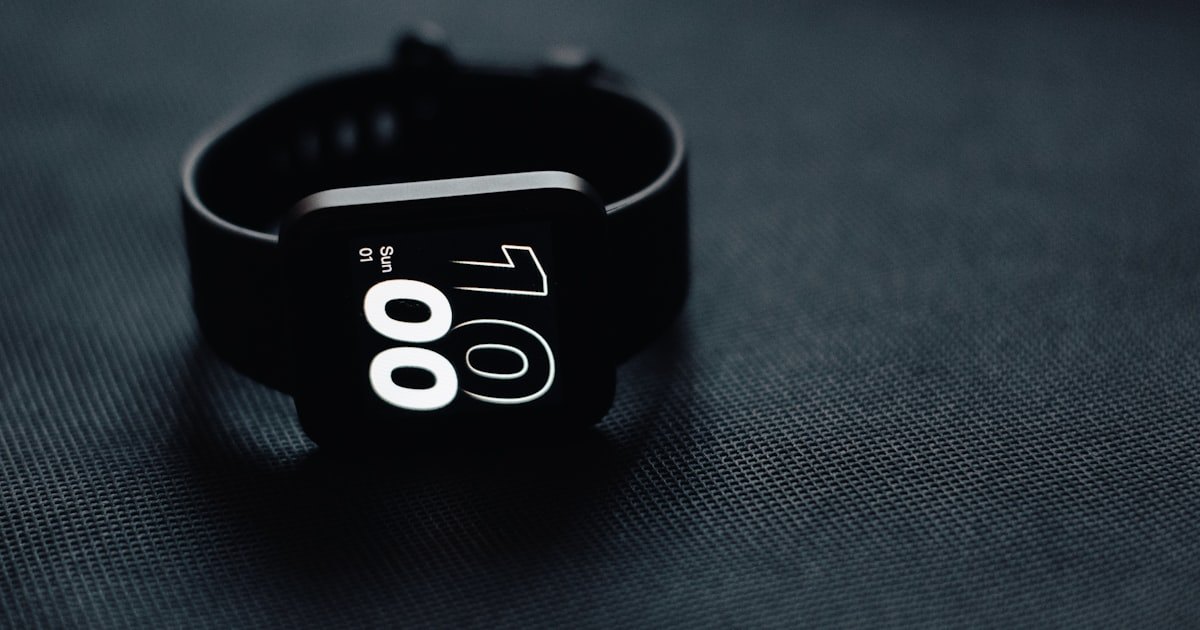
The most useful fitness-tech story today is not one new watch, ring, or app. It is the quiet way sleep and recovery scores have moved from novelty dashboards into everyday training decisions. A runner checks a readiness score before intervals. A cyclist delays a hard ride because heart-rate variability is low. A parent with a full workday wakes up to a red sleep score and wonders whether they have already failed before coffee.
That is a lot of authority to hand to a consumer device.
Wearables can be genuinely helpful. They can reveal patterns that are easy to miss: later bedtimes after late workouts, fewer steps on meeting-heavy days, resting heart rate rising during a stressful week, or sleep getting shorter when training load climbs. But the strongest evidence supports using these devices as trend tools, not as diagnostic instruments or personal commandments. The cleanest way to use them is to let the data start a conversation with your body and your schedule, not end it.
This is general fitness and technology information, not individualized medical advice. If sleep problems are persistent, severe, linked with breathing pauses, chest pain, fainting, unusual heart rhythms, injury, major mood changes, pregnancy, medication changes, or a medical condition, a clinician or qualified professional should be part of the decision-making.
What the tech claims
Most current wearables combine motion sensors, optical heart-rate sensors, skin-temperature estimates, blood-oxygen features on some devices, and proprietary algorithms. The app then turns those signals into friendly outputs: sleep duration, sleep stages, recovery, strain, readiness, body battery, training status, stress, or a suggested workout.
The marketing language often suggests three things:
1. The device can tell how well you slept.
2. The device can judge whether your body is ready to train.
3. The device can steer you toward better health habits.
The first claim is partly supported, depending on what you mean by “slept.” The second is plausible but far less settled, especially for individual decisions on a single morning. The third can be true when the technology nudges behavior without creating anxiety, overtraining, or data obsession.
The important distinction is between direct measurement and algorithmic inference. A wearable does not watch your brain move through sleep stages the way a lab sleep study does with polysomnography. It estimates sleep from signals such as movement and heart-rate patterns. A recovery score is another layer removed: it usually blends estimated sleep, resting heart rate, heart-rate variability, recent activity, and sometimes skin temperature or respiratory signals into a single number. The number can be useful, but it is not a medical finding.
What the evidence actually shows
The best short version: consumer wearables are often better at detecting sleep than detecting wake, mixed on sleep stages, generally useful for step trends, more dependable for heart rate than for calories, and least trustworthy when a single score is treated as a precise prescription.
A 2021 study in Sleep compared seven consumer sleep-tracking devices with polysomnography in 34 healthy young adults over three lab nights, including a disrupted-sleep condition. Most devices performed as well as or better than actigraphy for sleep/wake measures, but sleep-stage performance was inconsistent. The devices had high sensitivity for detecting sleep, while specificity for detecting wake was low to medium. They also tended to perform worse on poorer or disrupted sleep nights. That matters because the nights when people most want answers may be the nights when the device has a harder job.
A 2018 American Academy of Sleep Medicine position statement was cautious: consumer sleep technologies can support conversations between patients and clinicians, but they should not be used to diagnose or treat sleep disorders. The statement also called for better validation, access to raw data and algorithms, and appropriate oversight. The market has advanced since then, but the core caution still holds. New sensors do not automatically make opaque scores clinically reliable.
For broader wearable accuracy, a 2024 umbrella review in Sports Medicine looked across 24 systematic reviews covering 249 non-duplicate validation studies and more than 430,000 participants. It found that only about 11% of commercially available wearable devices had been validated for at least one biometric outcome. Heart-rate measurement showed relatively small mean bias, while physical-activity intensity errors were much larger. Wearables tended to underestimate step counts and energy expenditure, and sleep measurement tended to overestimate total sleep time.
That pattern fits what many users experience. Your watch may be useful for noticing that your resting heart rate has been elevated all week. It may be much less useful for deciding that you burned exactly 642 calories in a class or spent precisely 47 minutes in deep sleep.
A Fitbit-focused systematic review in JMIR mHealth and uHealth found that Fitbit devices were most defensible for step counts in adults without mobility limitations, but should be used with discretion for research or health-care decisions beyond that. Energy expenditure was a weak spot. This is not a knock on one company so much as a reminder that consumer devices are built for everyday feedback, not laboratory certainty.
How to use sleep and recovery scores well
Start with the least glamorous setting: consistency. Wear the device in the same place, with a similar fit, and interpret changes against your own baseline. A loose wrist strap, cold skin, tattoos, vigorous arm movement, device position, or a firmware change can alter readings. A ring that fits differently after heat, travel, or swelling can do the same.
Then widen the lens. One bad sleep score is not a verdict. Three to seven days of lower-than-usual sleep, higher resting heart rate, worse mood, and poor workout performance is more meaningful. The same goes in the other direction: one green readiness score does not prove a hard session is wise if your knee hurts, you feel sick, or you are running on fumes.
A practical approach:
- Use sleep duration and bedtime regularity as the first-order signals. They are easier to act on than sleep-stage percentages.
- Treat sleep stages as rough estimates. Do not chase “more deep sleep” with complicated rituals based only on one app graph.
- Compare recovery scores with lived signals: soreness, motivation, irritability, coordination, resting heart rate, and how warm-up sets or easy miles feel.
- Use the device to spot patterns. Late alcohol, late caffeine, late screens, heavy training, heat, travel, caregiving, stress, and illness can all show up in sleep or heart-rate trends.
- Keep hard days hard and easy days easy, but let a clearly bad trend nudge you toward a lower-risk option: technique work, mobility, an easy walk, or rest.
When the score should not be the boss
Do not let a wearable talk you into ignoring symptoms. Stop exercising and seek appropriate help for red flags such as chest pain, fainting, severe shortness of breath out of proportion to effort, new neurological symptoms, a suspected fracture, sudden severe pain, or signs of heat illness. For persistent insomnia, loud snoring with choking or pauses, excessive daytime sleepiness, suspected sleep apnea, unexplained heart-rate irregularities, or recovery problems that do not improve with rest, talk with a qualified professional.
Also be careful if the data itself is becoming stressful. Some sleep clinicians use the term “orthosomnia” to describe an unhealthy preoccupation with optimizing sleep-tracker data. The problem is not caring about sleep. The problem is when the score creates pressure that makes sleep harder. If checking the app first thing in the morning changes your mood before you notice how you actually feel, consider delaying the check or turning off certain metrics.
For athletes, recovery tech can be a useful guardrail, especially during high training load, travel, or heat. But it should sit below a real training plan, coaching judgment when available, and health context. For beginners, the best use may be simpler: build a routine, notice step and sleep patterns, and avoid turning every walk into a data exam.
The privacy tradeoff is real
Fitness wearables collect intimate data: sleep timing, heart rate, location for workouts, menstrual-cycle entries in some apps, stress estimates, contacts or social features, and sometimes health conditions inferred from patterns. Even when a company has strong security practices, the data can travel through app integrations, cloud storage, analytics providers, research programs, insurance incentives, workplace wellness plans, or social sharing.
The biggest privacy mistake is assuming all health data is protected the same way as a medical record. In the United States, HIPAA generally applies to covered health-care entities and their business associates, not every wellness app or wearable company. The Federal Trade Commission has used consumer-protection authority around health apps and connected devices, and its Health Breach Notification Rule can apply to certain vendors of personal health records and related entities. That is important, but it is not the same as saying every wearable data point has medical-record protection.
Before leaning heavily on a device, check a few settings:
- Turn off public workout maps unless you truly want them public.
- Limit third-party app connections you no longer use.
- Review whether your data is used for product improvement, ads, research, or partner sharing.
- Use strong passwords and multifactor authentication when available.
- Be cautious with workplace, insurer, or challenge programs where “voluntary” sharing may still carry pressure.
- Export or delete data only after reading what deletion actually covers.
A better way to think about the device
The healthiest role for a wearable is not judge, doctor, or coach-in-chief. It is a quiet field notebook. It records enough to show patterns, imperfectly. You bring context: the baby was up, the canyon trail was hot, the meeting ran late, the interval session felt flat, the grief or stress is real, the new medication started last week, the knee is not ready.
If the device helps you move a little more, protect an easy day, keep a steadier bedtime, or notice that your hard weeks need real recovery, it is doing useful work. If it makes you feel broken, watched, or obligated to obey a score that does not match your body, it is time to change the settings, simplify the metrics, or take a break from the dashboard.
The promise of fitness technology is not perfect self-quantification. It is better feedback with more humility. The best recovery score is still the one that leaves room for common sense.
Sources
- Chinoy ED, et al. “Performance of seven consumer sleep-tracking devices compared with polysomnography.” Sleep. 2021. https://pubmed.ncbi.nlm.nih.gov/33378539/
- Khosla S, et al. “Consumer Sleep Technology: An American Academy of Sleep Medicine Position Statement.” Journal of Clinical Sleep Medicine. 2018. https://jcsm.aasm.org/doi/10.5664/jcsm.7128
- Doherty C, et al. “Keeping Pace with Wearables: A Living Umbrella Review of Systematic Reviews Evaluating the Accuracy of Consumer Wearable Technologies in Health Measurement.” Sports Medicine. 2024. https://pubmed.ncbi.nlm.nih.gov/39080098/
- Feehan LM, et al. “Accuracy of Fitbit Devices: Systematic Review and Narrative Syntheses of Quantitative Data.” JMIR mHealth and uHealth. 2018. https://pubmed.ncbi.nlm.nih.gov/30093371/
- U.S. Department of Health and Human Services. Physical Activity Guidelines for Americans, 2nd edition. 2018. https://health.gov/sites/default/files/2019-09/Physical_Activity_Guidelines_2nd_edition.pdf
- Federal Trade Commission. “Health Breach Notification Rule.” https://www.ftc.gov/legal-library/browse/rules/health-breach-notification-rule
- U.S. Department of Health and Human Services. “Health Information Privacy.” https://www.hhs.gov/hipaa/index.html
Shadowfetch is a technology publication. Explore Shadowfetch Linux — our own Linux build — and the Shadowfetch apps on the App Store.
How we reported this
The article cites multiple peer-reviewed studies, position statements, and federal guidelines listed in its sources section.
- peer-reviewed studies
- position statements
- umbrella reviews
- federal guidelines
The Shadowfetch Brief
Get The Shadowfetch Brief
Stories like this — the technology that matters, one short morning email. Free.
See a problem in this story? Report an error · Corrections policy · Our methodology