
Newsletter
The New Frontier of Industrial Automation: Shenzhen Inovance's European Expansion
Shenzhen Inovance Technology is evaluating strategic acquisitions in Europe, signaling a significant push to compete directly with continental industrial incumbents.

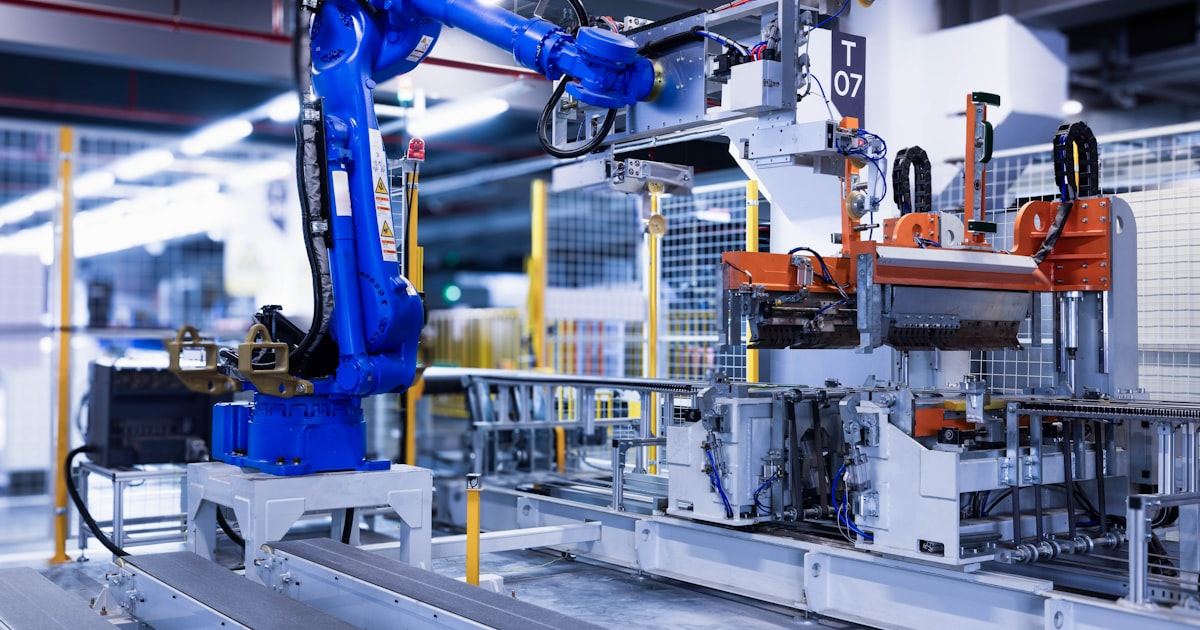
The global industrial automation landscape is undergoing a quiet but fundamental shift as Chinese manufacturers aggressively target the European market. Shenzhen Inovance Technology Co. Ltd., a dominant player in industrial robotics and motor control, is currently evaluating strategic acquisitions in Europe. This move signals a direct challenge to the industrial giants that have long anchored Europe's manufacturing heartland, including Siemens AG and ABB Ltd.
For European industrial players, the potential entry of Inovance represents a pivotal moment in the competitive environment. Unlike consumer-facing sectors where branding and aesthetic appeal often drive purchasing decisions, the industrial automation market is driven entirely by technical performance, system integration capabilities, and supply chain reliability. Inovance’s potential acquisition strategy is designed to bypass the traditional hurdles of entering a new geographic market by directly absorbing established European technical expertise.
Industry analysts observe that Inovance has built a formidable reputation in China by providing high-performance components—such as servo drives, programmable logic controllers (PLCs), and frequency inverters—at significantly more competitive price points than Western counterparts. By shifting its focus to Europe, the company is attempting to leverage its technical proficiency to compete with incumbents on their home turf. This mirrors broader trends where Chinese technology firms are moving beyond domestic dominance to secure international market share in sectors critical to infrastructure and manufacturing output.
The European manufacturing sector is particularly sensitive to these developments. With many European firms under sustained pressure to modernize their infrastructure while managing rising energy costs and complex labor dynamics, the availability of advanced, cost-effective automation technology is a high priority. However, this shift also introduces deep strategic considerations regarding technology sovereignty and the long-term dependency on non-European supply chains for critical industrial control systems, a topic now surfacing in policy discussions in Berlin and Brussels.
The potential acquisition targets remain a subject of market speculation, but the focus is expected to be on firms that provide specialized software or mechanical engineering capabilities that complement Inovance's existing hardware stack. Should these acquisitions proceed, they would likely mark the beginning of a sustained effort by Chinese industrial tech companies to capture significant market share in Europe. This move is not merely about selling hardware; it is about establishing a foothold within the European industrial ecosystem, providing maintenance, integration services, and long-term technical support.
The competitive stakes are high for legacy incumbents like Siemens, who are already navigating a period of significant technological and organizational transformation. Their response will likely involve a combination of accelerating their own digital service offerings and leveraging European market regulations to maintain their competitive advantage. Whether this environment will lead to consolidation or further fragmentation of the industrial automation sector remains a key question for the remainder of the year and into 2027.
As Inovance weighs its options, the move serves as a reminder of the global nature of industrial technology competition. The ability to integrate and deploy advanced robotics and control systems at scale is no longer the sole domain of a few established Western firms. As these capabilities disseminate globally, European industrial players are finding that their competitive edge is being tested by new entrants with different economic models and rapid development cycles.
The coming months will be critical as market watchers look for clarity on which companies might be targeted and how European regulators respond to the prospect of increased foreign ownership of industrial automation infrastructure. The outcome of these moves will help define the competitive structure of the European manufacturing sector for years to come, influencing not just the automation market, but the broader European industrial strategy.
Sources
- China’s Siemens Competitor Eyes Buying Its Way Into Europe (Bloomberg)
- Industrial Automation Market 2026 Trends and Outlook (International Federation of Robotics)
- Inovance Technology Global Corporate Strategy & Operations (Shenzhen Inovance Official Investor Relations)
- European Industrial Policy and Foreign Direct Investment (European Commission / Eurostat)
Shadowfetch is an independent news publication. Explore Shadowfetch Linux — our own Linux build — and the Shadowfetch apps on the App Store.
Sources
- Industrial Automation Market 2026 Trends and Outlook (International Federation of Robotics)
- Inovance Technology Global Corporate Strategy & Operations (Shenzhen Inovance Official Investor Relations)
The piece is argued from market analysis and cited source links, including a Bloomberg article, industry outlook material, Inovance investor relations, and European industrial policy materials.
Evidence types: opinion, market analysis, industry outlook, company information, policy materials
Links verified
See a problem in this story? Report an error · Corrections policy · Our methodology
The Daily Newsletter
One morning email: the day’s biggest technology stories — AI, new devices, and the companies shaping them.
Related coverage
 newsletter
The Carbon Hangover: Microsoft and the AI-Climate Collision
Sloane Gallagher ·
 newsletter
Europe’s Google order turns AI search into a reader-choice test
Celine Moreau ·
 newsletter
Sheetz’s VMware exit turns a licensing gripe into an edge-computing warning
Celine Moreau ·