
Technology
Review: Nintendo Switch 2 is the safe upgrade — and that is mostly the point
Nintendo’s Switch 2 is a smarter, sharper family console with real performance gains, but battery life, storage lock-in, and repair uncertainty keep it from being a no-brainer.

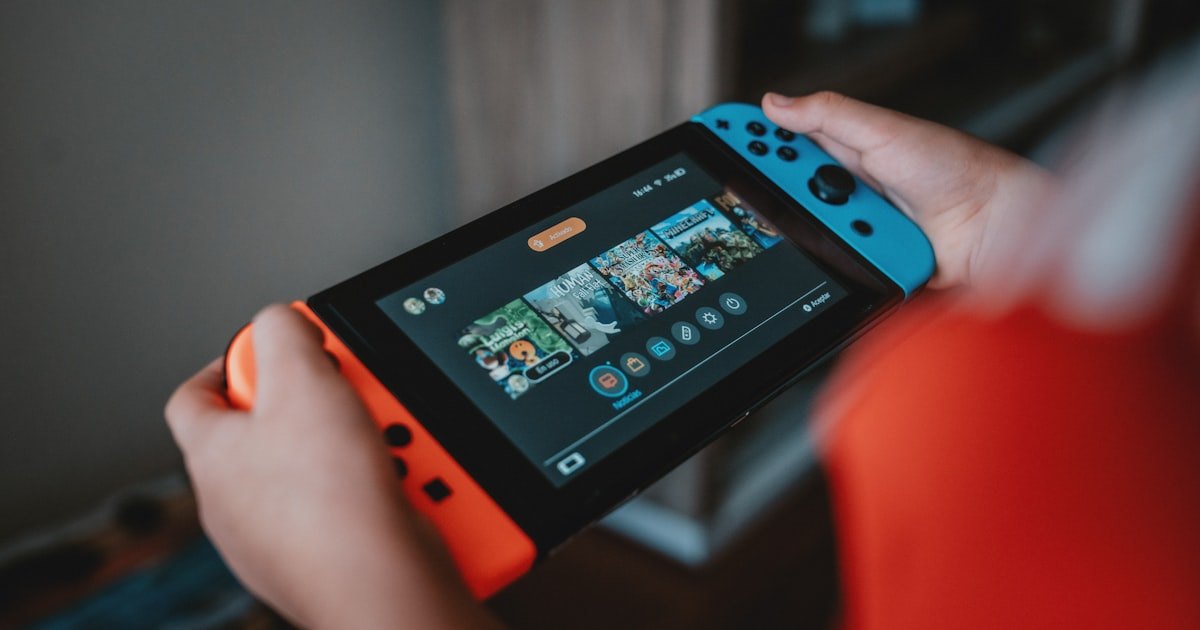
Verdict: the Nintendo Switch 2 is the right buy for families, Nintendo-first players, and anyone who wants a simple living-room-plus-handheld game machine with a much sharper screen and faster hardware. It is not the best pick for PC-game bargain hunters, repairability hawks, or Switch OLED owners who mostly play lighter indie games and already like their screen. Shadowfetch rating: 8.1/10.
Nintendo did not reinvent the Switch. Good. The original idea was never the problem. The problem was that the 2017 hardware spent its later years feeling small, slow, and increasingly fragile next to newer handheld PCs. Switch 2 answers that with a bigger 7.9-inch 1080p LCD, HDR10 support, variable refresh rate up to 120Hz in handheld mode, 256GB of internal storage, a custom Nvidia processor, magnetic Joy-Con 2 controllers, GameChat, and 4K output up to 60fps through the dock for supported games. The official U.S. MSRP is $449.99, and Nintendo’s current store page lists the console as available now, with a “Choose Your Game” bundle that claims savings up to $29.99 while supplies last.
That makes this an unusually easy review to frame: Switch 2 is not a thrilling spec flex. It is a quality-of-life console. The screen is larger and higher-resolution. Games load faster. Text is easier to read. The docked image can finally look at home on a modern 4K TV. The kickstand and magnetic controllers make the hardware feel less toy-like. And, crucially, it still behaves like a Switch. You undock it, hand someone a controller, and get back to the game instead of managing drivers, launchers, or a heat-blasting handheld PC. That simplicity is still Nintendo’s killer feature.
What is genuinely new is the hardware headroom. Nintendo lists the Switch 2 screen as a 1920 x 1080 LCD with HDR10 and VRR up to 120Hz. In TV mode, the dock can output up to 3840 x 2160 at 60fps, with 120fps supported at 1080p and 1440p. The storage jump to 256GB is welcome, though not generous by 2026 standards, and expansion now requires microSD Express cards up to 2TB. Older microSD cards are limited to copying screenshots and videos from the first Switch, so that drawer full of cheap cards is not the budget win it used to be.
Performance is the best reason to upgrade from an original Switch. Nintendo only describes the processor as a custom Nvidia chip, but independent reviews consistently point to the same real-world result: Switch 2 makes Nintendo’s hybrid design feel current again. The Verge found faster load times, smoother games, and a brighter, crisper handheld image, while Engadget called out significantly better performance and stronger first-party results. I am not publishing lab benchmarks here because Shadowfetch has not run its own timed tests on a retail unit. The responsible read is simpler: if your current Switch struggles with newer games, Switch 2 is the fix; if you mostly play Stardew Valley, Picross, and older Nintendo titles, the speed gain is nice but not urgent.
The screen is a tradeoff, not a clean win. The 7.9-inch panel is larger, sharper, and faster than the original Switch display, and HDR support is the right forward-looking move. But it is still LCD. If you own a Switch OLED, you may miss the deeper blacks and punchier contrast. This is the most Nintendo decision on the whole device: choose broader performance and cost control over the obvious luxury panel. For family rooms, travel, and couch play, the bigger 1080p screen is the more useful upgrade. For late-night handheld play in a dark room, OLED still has that little ocean-at-sunset magic.
Battery life is the main bummer. Nintendo rates Switch 2 at roughly 2 to 6.5 hours, depending on the game, with a 5220mAh internal battery and about a three-hour charge time in sleep mode. Reviewers have also flagged battery life as a weakness, especially with more demanding games. That does not make the console bad; it does make it less carefree than the original promise of “take it anywhere.” For flights, road trips, or long tournament days, budget for a serious USB-C battery pack. Tiny purse chargers are not going to feel very heroic here.
The Joy-Con 2 controllers are the most visible day-to-day improvement. The magnetic attachment is cleaner than the old rail system, and the larger controls should be more comfortable for adult hands. The new mouse-sensor mode is more interesting than it sounds, especially for strategy games and interfaces that never felt natural on analog sticks. But the trust issue remains: The Verge notes Nintendo has not moved to anti-drift Hall effect sticks. After years of original Joy-Con drift complaints, that is not a footnote. It is a wait-and-see durability risk on a $450 console.
GameChat is also more useful than Nintendo’s old voice-chat workaround. The dedicated button, built-in microphone, and optional camera support finally put party chat where it belongs: on the console. That said, this is also where families should slow down. Nintendo’s privacy policy says services may allow users to create, upload, or share text, images, audio, video, nicknames, and user icons, and that with consent and to enforce terms it may monitor and record video and audio interactions. That is not unusual for a modern online service, but parents should treat GameChat like a real social feature, not a cute local-party extra. Set family controls, talk through voice and camera rules, and do not assume Nintendo’s friendlier brand makes online communication risk-free.
Value depends heavily on your library. At $449.99, Switch 2 is expensive compared with what many people paid for the original Switch, but it is not outlandish for a modern console-handheld hybrid. The current Nintendo bundle softens the hit if one of the included games is already on your list. The catch is lock-in. Nintendo’s strongest games hold their prices, online play and GameChat push you toward Nintendo’s services, and storage expansion requires newer microSD Express cards. Physical-game buyers should also watch for “game-key card” releases, which can require downloads rather than carrying the full game on the card. None of this is fatal; all of it adds up.
Repairability is the least settled part of the recommendation. The battery is internal, the controllers are more complex, and Nintendo’s history with stick drift gives buyers reason to care about long-term service options. I did not find a full reader-facing repairability score from a major teardown source suitable to cite here, so the honest label is unverified: we do not yet have enough public repair data to say whether Switch 2 will be meaningfully easier to service than the original. If you keep consoles for eight years or hand them down to kids, buy with that uncertainty in mind.
The best alternative is not another Nintendo console unless you are deep in Nintendo’s first-party catalog. If you mainly want Mario Kart, Zelda, Animal Crossing, Pokémon, Splatoon, and local multiplayer, buy the Switch 2. If you mainly want cheaper PC games, mods, flexible stores, and a better handheld display, Valve’s Steam Deck OLED is the stronger alternative. It has a 7.4-inch HDR OLED screen, Wi-Fi 6E, and a much more open software ecosystem. It is also bigger, less plug-and-play for families, and not where Nintendo’s exclusives live. Different beach bags, basically.
So, should you buy it? Yes, if your old Switch feels tired, your household plays Nintendo games together, or you want the least fussy handheld console that also works on a TV. Wait if you own a Switch OLED and mostly play undemanding games, if battery life is your top priority, or if you want to see whether stick durability and repair options improve after more units spend real time in real homes.
Switch 2 is not the most daring gadget of the year. It is the console equivalent of a well-packed weekend bag: better screen, better speed, better dock, better social tools, and just enough compromises to remind you that Nintendo still likes control. For most Nintendo households, that is enough.
Sources
- Nintendo Switch 2 official product page, price, availability, and bundle details
- Nintendo Switch 2 official technical specifications
- The Verge review: “Nintendo Switch 2 review: exactly good enough”
- Engadget review: “Nintendo Switch 2 review: More of what you love”
- Nintendo Privacy Policy
- Valve Steam Deck OLED official page
Shadowfetch is a technology publication. Explore Shadowfetch Linux — our own Linux build — and the Shadowfetch apps on the App Store.
Sources
- Nintendo Switch 2 official product page, price, availability, and bundle details
- Nintendo Switch 2 official technical specifications
- The Verge review: “Nintendo Switch 2 review: exactly good enough”
- Engadget review: “Nintendo Switch 2 review: More of what you love”
- Nintendo Privacy Policy
- Valve Steam Deck OLED official page
The article cites Nintendo product and specs pages, Nintendo privacy policy, and reviews from The Verge and Engadget.
Evidence types: official product page, official technical specifications, independent reviews, privacy policy
Links verified
See a problem in this story? Report an error · Corrections policy · Our methodology
The Daily Download
One morning email: the day’s biggest technology stories — AI, new devices, and the companies shaping them.
Related coverage
 Technology
Painted e-tattoos make the wearable sensor the disposable part
Katie Browder ·
 Technology
Apple Intelligence clears a China hurdle, but users should wait for the fine print
Lyra Kensington ·
 Technology
Samsung’s Flex Titanium foldable display is promising — but not proof yet
Zoraida Cruz ·