
Technology
Space Force’s Slingshot award makes orbital training the real space-tech story
A $69.2 million Space Force award to Slingshot Aerospace is not a launch-day spectacle; it is a signal that orbital decision-making is becoming infrastructure.

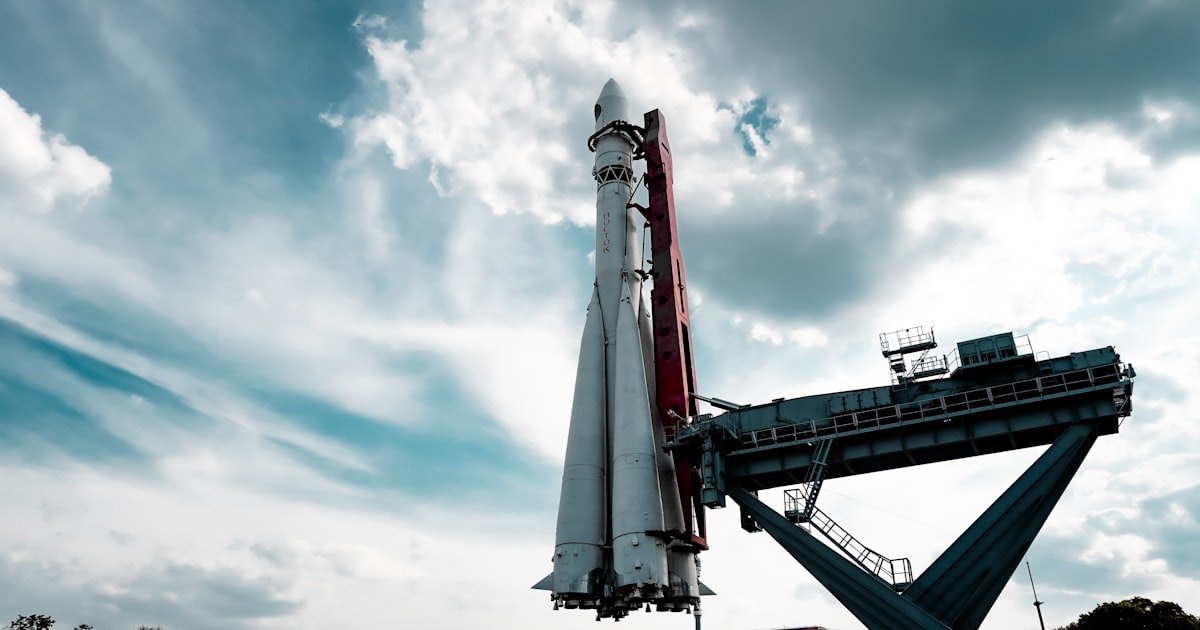
The most consequential space-development news today is not a launch plume, a new constellation rendering, or another promise that artificial intelligence will make orbit simple. It is a contract for rehearsal.
Slingshot Aerospace announced July 15 that it received a $69.2 million, 4.5-year U.S. Space Force award to build AI-enabled mission rehearsal and operational training capabilities for Guardians who protect and defend U.S. and allied space systems. SpaceNews separately reported the award as a Small Business Innovation Research Phase III contract supporting the Space Force’s Operational Test and Training Infrastructure program.
That sounds less cinematic than a rocket clearing the tower. It may matter more.
Modern space infrastructure is crowded, commercially entangled, and increasingly treated by militaries as contested terrain. Satellites that guide aircraft, timestamp bank trades, move military communications, support weather forecasting, collect imagery, and connect remote users do not fail in isolation. A maneuver near a spacecraft, a jamming episode, a cyber incident against a ground segment, or a misleading track in a space-domain-awareness feed can ripple into decisions on Earth. The new Slingshot award is about practicing those decisions before a real satellite is at risk.
The distinction matters. This is not a new missile, not a new orbital payload, and not proof that an AI system can safely run a space-defense operation. It is a funded step toward a persistent training environment: simulated spacecraft behavior, orbital data, astrodynamics, scenario generation, and decision-support systems packaged so operators can rehearse abnormal or adversarial activity more often than traditional large exercises allow.
In other words: the hardware has not changed in orbit today. The ground system around orbital decision-making may be changing.
What changed
Slingshot says the program, called MENTAT, is built around TALOS, its AI-powered operational training and strategy agent. The company describes TALOS as a system that models spacecraft behavior, generates response options, processes complex data, and supports mission rehearsal across changing space scenarios. The award builds on an earlier Slingshot effort to develop a “Digital Space Twin” of the space operating environment.
The company frames the new work as moving advanced training from occasional, specialized events into more continuous access from home stations and daily work environments. That is the operationally meaningful part. A team that can repeatedly train against changing scenarios has a better chance of learning how uncertainty actually behaves: ambiguous intent, incomplete sensor coverage, orbital mechanics constraints, communications delays, and the political cost of overreacting.
The public sources reviewed for this article did not include a separate accessible Defense contract notice with full terms before publication, so the dollar value, duration, program label, and technical details are attributed to Slingshot’s announcement and SpaceNews’ reporting. Readers should separate three layers: what has been funded, what the contractor says the system will do, and what operators have actually validated under controlled conditions.
Today’s verifiable change is funding and program direction, not a public demonstration that AI can reliably identify intent or recommend the right response in every orbital incident.
Why it matters
Space operators face a training problem that aviation, maritime, and cyber teams would recognize: the most consequential scenarios are too risky, too rare, or too politically sensitive to practice live.
You cannot casually stage a close approach to a national-security satellite just to teach a crew how it feels. You cannot jam critical links at scale without affecting real users. You cannot ask commercial spacecraft to behave like adversary assets whenever a training unit needs a new drill. And because orbital motion is unforgiving, even a “small” maneuver can have fuel, collision-avoidance, and attribution consequences.
That makes simulation infrastructure a strategic asset. Good simulation lets teams practice without putting spacecraft in danger. Bad simulation teaches false confidence. The difference is not whether the user interface looks futuristic; it is whether the model handles uncertainty, timing, sensor limits, and human decision loops honestly.
The Slingshot award lands in a broader shift in the space economy. Governments are buying not only satellites and launch services, but also the software layers that turn orbital data into operational choices. Space-domain-awareness companies, tracking networks, data-fusion providers, and training-platform vendors are becoming part of the infrastructure stack. Orbit is infrastructure, but so are the systems that decide what orbital behavior means.
This is also where the AI label needs discipline. AI may help generate scenarios, simulate adaptive behavior, sort through tracks, and stress-test response options faster than a manual exercise cell. It can also encode assumptions, amplify bad data, create explainability problems, and make a simulated opponent look more knowable than a real one. In space, “intent” is not directly observed; it is inferred from behavior, context, capability, and sometimes classified information. A model that predicts a maneuver is not the same thing as evidence of hostile intent.
Who is affected
The immediate users are Space Force Guardians and allied space-defense teams that need to rehearse protect-and-defend missions. The next circle includes commercial satellite operators whose spacecraft may appear in the operating picture, whose services may be affected by national-security incidents, or whose own tracking data becomes part of fused training environments.
Civil users are indirectly affected because the same orbital neighborhood supports weather data, emergency response, positioning, communications, finance, and transportation. A training system that helps operators avoid misreading routine maneuvers as hostile could reduce escalation risk. A training system that normalizes aggressive assumptions could do the opposite.
The award also matters to the space startup market. A $69.2 million, multiyear defense award is a meaningful signal for a company that sells space-domain-awareness and decision-support products. It tells investors and competitors that the training and simulation layer is not a side market; it is becoming a procurement lane. That may pull more companies toward defense customers, with all the benefits and tradeoffs that brings: steadier funding, demanding security requirements, less public transparency, and stronger dual-use concerns.
The tradeoffs to watch
First, validation. The public should not evaluate this program by demo videos or press-release language. The useful questions are narrower: How often do operators train with it? Does it improve recognition of abnormal behavior without increasing false alarms? Are recommendations explainable? Is the system tested against messy real-world data, or only against curated exercises?
Second, data governance. A “digital twin” of the space operating environment may combine public catalogs, commercial sensor data, proprietary databases, operator inputs, and government feeds. Who can access those layers? What is retained? How are commercial satellites represented? What happens when data from allied or private systems is wrong, incomplete, or sensitive?
Third, escalation risk. Training for contested space is necessary; making every orbital event feel like a combat scenario is dangerous. A responsible simulator should include benign explanations, sensor errors, space-weather effects, catalog uncertainty, and operator mistakes, not just adversary playbooks. The night sky is busy enough without teaching every console to see a threat in every track.
Fourth, single-provider dependence. If mission rehearsal, data fusion, and AI strategy systems converge inside a small set of vendors, agencies may gain speed while losing portability. The Space Force should insist on open interfaces where security allows, independent evaluation, and the ability to compare model outputs across systems.
Fifth, debris and spectrum reality. This contract does not add satellites, so it does not directly worsen orbital congestion. But the scenarios it trains for are rooted in a domain already stressed by debris risk, limited tracking resolution, contested spectrum, and proliferating spacecraft. Training should not treat space as an empty chessboard.
What readers should do
Treat this as a procurement signal, not a launch-day triumph. The headline is that the Space Force is spending real money on the software and simulation layer required to operate in a contested orbital environment. That is consequential because the most important space systems often fail or survive through ground decisions: what operators notice, how they interpret it, who they notify, and whether they respond with restraint.
If you run a company that depends on satellite connectivity, imagery, timing, or weather data, ask vendors how they handle space-service disruptions and what assumptions sit behind their resilience plans. If you work in public policy, watch whether AI-enabled space training comes with independent testing and clear human accountability. If you are an investor, distinguish operational infrastructure from buzzwords around AI and orbit. If you care about keeping space usable, follow contract modifications, budget lines, test reports, and after-action summaries.
The useful space story today is not that AI is coming to orbit. It is that militaries are building the rehearsal rooms for decisions that may one day determine whether a satellite anomaly remains a technical incident or becomes a geopolitical crisis.
That is a ground-system story with orbital consequences. No plume required.
Sources
- Slingshot Aerospace: “Slingshot Aerospace Wins $69.2 Million U.S. Space Force Contract to Advance AI-Powered Mission Readiness for Space Defense”
- SpaceNews: “Space Force awards Slingshot $69 million for AI-enabled training technology”
- U.S. Space Force: Spacepower capstone doctrine
Shadowfetch is a technology publication. Explore Shadowfetch Linux — our own Linux build — and the Shadowfetch apps on the App Store.
Sources
The article attributes award details to Slingshot’s announcement and SpaceNews reporting, while noting no separate accessible Defense contract notice was reviewed before publication.
Evidence types: company announcement, direct reporting, public doctrine document
See a problem in this story? Report an error · Corrections policy · Our methodology
The Daily Download
One morning email: the day’s biggest technology stories — AI, new devices, and the companies shaping them.
Related coverage
 Technology
CISA’s KNX warning is a smart-building security story, not a smart-home panic
Safiya Rahman ·
 Technology
CISA’s new vulnerability-disclosure guidance is a quiet win for everyone who depends on software
Safiya Rahman ·
 Technology
CISA says Oracle Payments is being exploited. That is a boardroom patch, not a panic.
Safiya Rahman ·