
Technology
SpaceX’s first public-market wobble is a valuation test, not a launch failure
SpaceX’s first dip below its IPO price shows investors are starting to separate Starlink’s real profits from the capital demands of rockets and AI infrastructure.

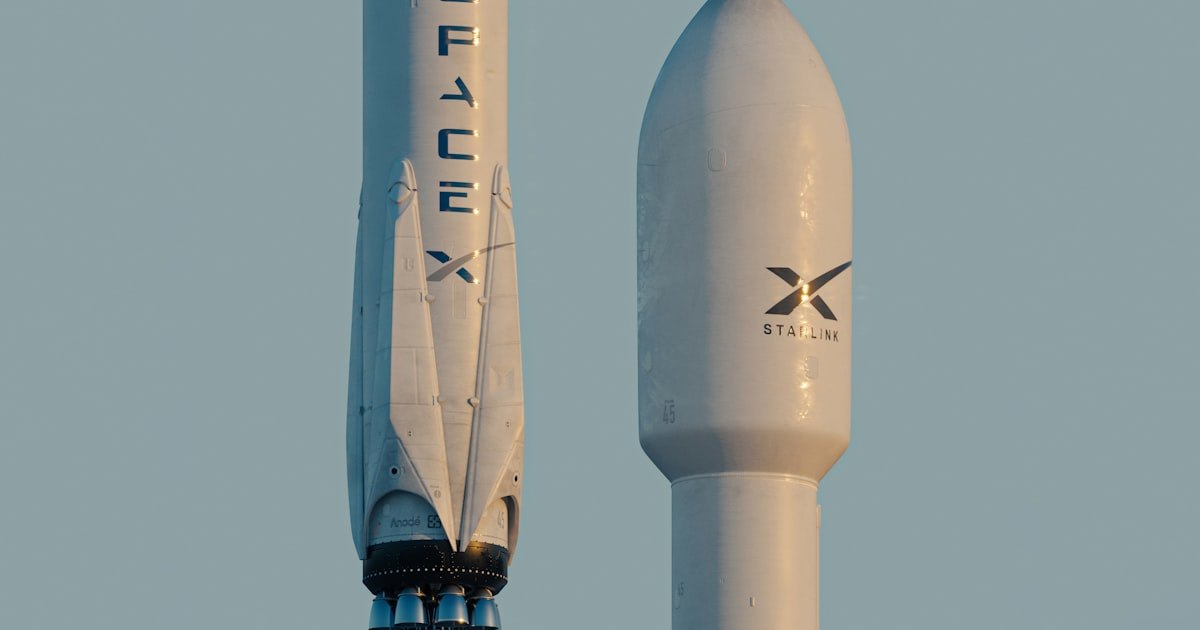
Technology reporting: SpaceX’s first public-market wobble is a valuation test, not a launch failure
SpaceX shares briefly fell below their $135 initial public offering price on Wednesday and closed at $135.27, according to CNBC. The move was modest on the tape but meaningful in context: less than five weeks after the largest technology IPO in years, public investors are beginning to separate SpaceX’s operating machine from the valuation story built around it.
That distinction matters because SpaceX is no longer just a private rocket company that periodically reset its worth in closed fundraising rounds. It is now a public-market composite: launch provider, satellite broadband network, government contractor, artificial-intelligence infrastructure operator, social-platform ad business by way of X, and founder-control governance experiment. Dropping below the IPO price for the first time is a clean signal that the market is no longer simply applauding scarcity.
This is not financial or investment advice. The useful question is what the first crack in the IPO halo says about SpaceX’s economics and the competitive map around launch, satellite connectivity and AI infrastructure.
What happened
CNBC reported that SpaceX fell for a fourth straight session Wednesday, briefly trading below its $135 IPO price before closing just above it. The drop came days after the company entered the Nasdaq-100, a move CNN reported was enabled by Nasdaq’s updated eligibility rules allowing newly public companies to join after 15 trading days rather than waiting at least three months.
The company’s June prospectus says SpaceX offered 555,555,555 Class A shares at $135 each, for $74,999,999,925 in gross offering value before underwriting discounts and expenses. The same filing says underwriters had a 30-day option to buy up to an additional 83,333,333 shares. CNBC described the IPO as having raised a record $86 billion; the filing supports $75.0 billion from the base offering and up to another roughly $11.25 billion if the over-allotment was exercised. The exact final amount should be tied to closing documentation, not rounded market shorthand.
SpaceX’s debut also became an index event. CNN reported that more than 200 investment products with $800 billion in assets track the Nasdaq-100, meaning SpaceX’s inclusion forced index-tracking funds to buy exposure. Mechanical demand can support a stock in the short run; it does not answer whether the underlying mix deserves the multiple.
What the numbers actually show
The prospectus shows a business growing quickly, but not cleanly. Revenue rose to $18.674 billion in 2025 from $14.015 billion in 2024, up 33.2%. But SpaceX swung from net income of $791 million in 2024 to a net loss of $4.937 billion in 2025. For the first quarter of 2026, revenue rose 15.4% to $4.694 billion from $4.067 billion a year earlier, while net loss widened to $4.276 billion from $528 million.
That is the first reality check: SpaceX is not being valued as a mature launch contractor. Its public story depends on several capital-heavy businesses reinforcing each other faster than they consume cash.
The segment data explains the tension. In 2025, Connectivity — Starlink and related services — generated $11.387 billion of revenue, up from $7.599 billion in 2024, and reported $4.423 billion of operating income. That is the strongest business-quality evidence in the filing. Starlink is no longer just a deployment story; it is the profit center carrying much of the model.
Space, which includes launch services and launch development, generated $4.086 billion in 2025 revenue, only modestly above $3.796 billion in 2024, and recorded a $657 million operating loss. In the first quarter of 2026, Space revenue declined to $619 million from $865 million a year earlier, with a $662 million operating loss. Launch remains strategically essential because it lowers the cost of deploying Starlink and gives SpaceX leverage with governments and commercial customers. On the reported financials, it is not the near-term profit engine.
Then there is AI. SpaceX’s prospectus says the consolidated financial statements were recast to include xAI, acquired in February 2026, and X Holdings, acquired by xAI in March 2025, because the transactions were between entities under common control. The AI segment produced $3.201 billion in 2025 revenue, up from $2.620 billion in 2024, but posted a $6.355 billion operating loss. In the first quarter of 2026, AI revenue was $818 million, while operating loss was $2.469 billion.
So the market is being asked to price three things at once: a profitable satellite-connectivity business, a strategically vital but uneven space-launch business, and an expensive AI/data-center/social platform bundle. That is why a stock that ran above $225 in its first month, according to CNBC, could quickly find buyers less automatic once index demand and IPO excitement had done their first lap.
Why SpaceX did it
The company framing is straightforward: SpaceX presents the combined business as a vertically integrated technology system. Rockets put satellites and payloads into orbit. Starlink monetizes the orbital network. AI and X add data, compute demand, products and distribution.
The independent evidence is more mixed. SpaceX also issued $25.0 billion of senior unsecured notes in June across maturities from 2031 to 2056, according to an 8-K filing. It said proceeds would repay outstanding borrowings under a bridge loan facility, pay fees and expenses, and support general corporate purposes. That is not unusual for a newly public, capital-intensive company, but it underlines the point: SpaceX’s strategy requires enormous balance-sheet capacity.
Going public helps create that capacity. A public listing gives SpaceX a broader shareholder base, a tradable currency, and index eligibility that private markets cannot provide. The tradeoff is that quarterly losses, segment economics and governance structure are now part of the public conversation.
Who wins and who loses
The clearest winner is Starlink, at least inside the story SpaceX has told investors. Connectivity is the segment with scale, growth and operating income. If investors start demanding proof instead of possibility, Starlink becomes the asset that can defend the valuation.
Government and enterprise connectivity customers may also benefit if public capital lets SpaceX keep expanding capacity. But customers also face concentration risk: a dominant vertically integrated supplier can become harder to replace once devices, service contracts and mission workflows are built around it.
Traditional launch competitors face a different problem. SpaceX’s strategic value is not only launch margin; it is launch control. A rival that must buy rides, wait for capacity or price against reusable rockets is competing against an integrated machine, not a standalone contractor.
The losers, for now, are investors and rivals who treated scarcity as a substitute for scrutiny. The stock’s move below the IPO price does not break SpaceX’s business. It does challenge the idea that public investors would automatically assign private-market mystique to a public company with widening losses and a complicated related-party history.
What to watch next
First, watch whether SpaceX files clearer post-IPO updates on the final IPO proceeds and any over-allotment exercise. The difference between a $75.0 billion base offering and an approximately $86.25 billion fully exercised offering is not a rounding error, even by this market’s “sure, why not” standards.
Second, watch the next quarterly filing for segment margins. If Connectivity keeps expanding while Space and AI losses narrow, the combined-company thesis gets stronger. If AI losses keep widening faster than Starlink can fund them, investors may begin valuing SpaceX less as a space-and-connectivity platform and more as another AI infrastructure spender with a rocket business attached.
Third, watch Starship execution. SpaceX’s launch schedule showed the 13th Starship test flight planned for July 16. A test flight is not an earnings release, but Starship is central to the long-term cost curve and the capital plan.
Finally, watch governance. The prospectus says Elon Musk would hold about 82.4% of the voting power after the offering, or about 82.3% if the underwriters exercised their option in full, and that SpaceX would be a controlled company under Nasdaq rules. Public investors can accept founder control. What they cannot avoid is pricing it.
SpaceX’s first dip below the IPO price is not the end of the story. It is the beginning of a more useful one: a public test of whether the company’s profitable satellite network can carry the costs of rockets, AI infrastructure and founder-scale ambition at the same time.
Sources
- SpaceX final IPO prospectus filed with the SEC, June 12, 2026
- SpaceX Form 8-K on $25.0 billion senior notes issuance, June 26, 2026
- CNBC: “SpaceX stock sinks below $135 IPO price for the first time”
- CNN: “SpaceX is joining the Nasdaq 100. Here’s what to know”
- SpaceX launches page
Shadowfetch is a technology publication. Explore Shadowfetch Linux — our own Linux build — and the Shadowfetch apps on the App Store.
Sources
- CNBC: “SpaceX stock sinks below $135 IPO price for the first time”
- CNN: “SpaceX is joining the Nasdaq 100. Here’s what to know”
- SpaceX launches page
The article cites CNBC and CNN reports, SpaceX SEC filings, its prospectus, an 8-K filing, and SpaceX’s launches page.
Evidence types: news reports, SEC filing, IPO prospectus, company launch page
Links verified
See a problem in this story? Report an error · Corrections policy · Our methodology
The Daily Download
One morning email: the day’s biggest technology stories — AI, new devices, and the companies shaping them.
Related coverage
 Technology
China’s new AI-governance bloc turns standards into a geopolitical contest
Kimmy Conner ·
 Technology
Telstra’s outage explanation is a reminder to make your phone less single-point-of-failure
Shannon Bulz ·
 Technology
Europe’s Google order turns AI search into a reader-choice test
Celine Moreau ·