
Technology
The TSMC Spending Wall
TSMC’s $100 billion investment pledge exposes the widening gap between the insatiable demand for AI infrastructure and the sobering reality of semiconductor profitability.

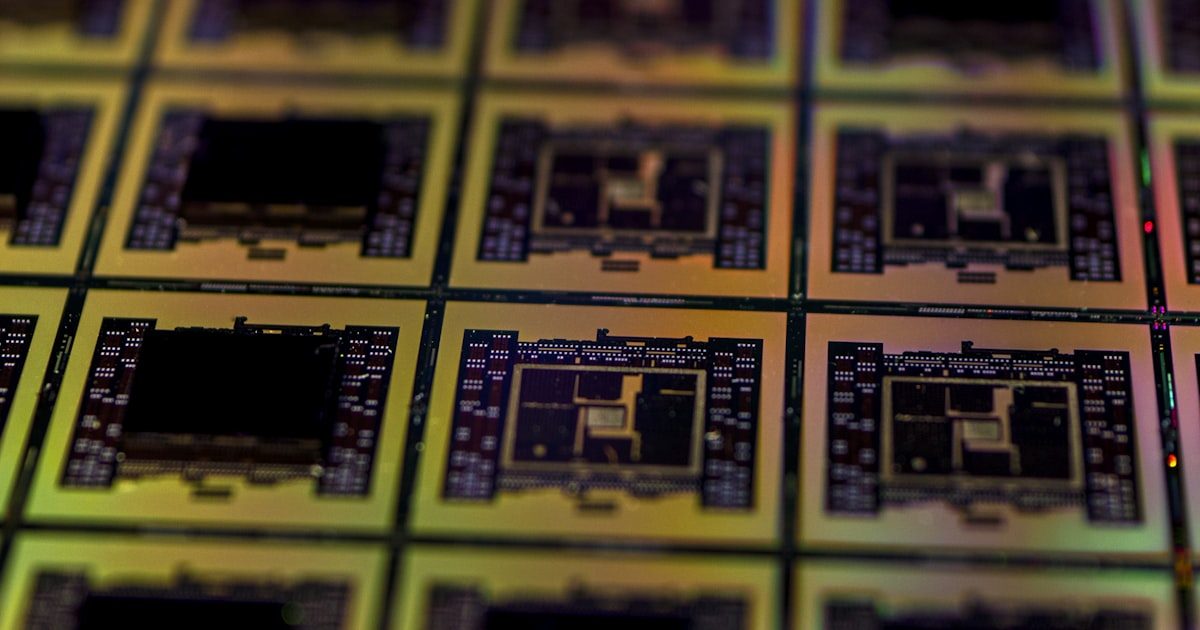
The current AI boom has been defined by a relentless drive toward more compute, more power, and more silicon. At the center of this pipeline stands Taiwan Semiconductor Manufacturing Company (TSMC), the foundry that effectively builds the world’s most advanced AI processors. This week, however, the industry’s central tension—the massive, capital-intensive expansion required to fuel the AI wave versus the sobering reality of profitability in an uncertain market—came to a head.
TSMC’s latest move—pledging an additional $100 billion to its U.S. operations—is a clear statement on where the company believes infrastructure needs are headed. Yet, market reaction was unexpectedly cold, with Taiwan-listed shares poised for correction. The central question for operators and developers is no longer whether we need more chips, but whether the infrastructure layer itself is hitting a limit where the cost of capacity begins to outpace the immediate, profitable demand.
What Changed: The Scale of Ambition
TSMC’s commitment to its Arizona fabrication operations, now totaling an unprecedented $100 billion, is the latest proof that the "infrastructure gold rush" is increasingly decentralized. For developers accustomed to treating the cloud as a near-infinite, scalable commodity, this shift marks the end of an era where hardware supply was mostly assumed to be managed by someone else.
The expansion is driven by a need to localize supply chains, a direct response to geopolitics, but it also reflects the insatiable appetite of AI models. However, the market’s reaction highlights a disconnect. While customers like NVIDIA are clamoring for every wafer they can get, investors are now questioning the long-term margin profile for the foundry itself. The "spending wall" isn't a lack of money; it's a structural realization that building and operating these fabs is becoming significantly more expensive and technically complex, leading to fears that profit margins will be squeezed for years to come.
How it Works: The Physics of Capital Intensity
To understand why this spending is so controversial, you have to look at the process. Building a modern fabrication plant—a "fab"—is one of the most complex engineering projects on Earth. It requires integrating hyper-precise lithography, high-vacuum environments, and sophisticated chemicals, all while maintaining yields that have to reach near-perfection to be profitable.
Every step deeper into sub-2nm processes demands more expensive machinery, more specialized energy, and more highly trained engineers. When TSMC increases spending, they aren't just buying more machines; they are essentially buying the global infrastructure to support those machines—power grids, specialized logistics, and localized talent pools. This is a massive "bet the company" level of capital expenditure (capex). When demand is consistent and margins are high, this pays off. But in the current volatile economic environment, where AI projects are still proving their real-world ROIs, the market is signaling that this capital commitment is inherently risky.
Whether the Evidence Shows it Matters
The evidence is two-fold. First, the market response is significant. When TSMC’s results stoked worries about heavy spending, it wasn't just a day-trader fluke—it reflected a broader skepticism in the Asian markets regarding the sustainability of the current chip-industry capex cycle. Second, the investment itself is concrete. This isn't a roadmap; it's a massive, long-term operational commitment that will reshape the U.S. semiconductor landscape.
For general readers, this matters because it impacts the cost of every technology service. If fabs can't achieve profitability at their current spend, those costs will inevitably be passed down the stack to the software layer. We aren't just talking about higher cloud prices; we are talking about a potential slowdown in the pace of hardware-enabled innovation if the economics of the fabrication layer become too prohibitive to justify the next generation of infrastructure build-out.
Who is Affected and What to Do
The primary actors affected are the foundry customers—the big tech firms designing their own silicon—and the thousands of smaller developers whose products rely on the cloud infrastructure these chips power.
For developers and systems operators, this is a signal to stop treating hardware as a bottomless resource.
- Focus on Efficiency: Software architecture that prioritizes compute and memory efficiency is no longer just a "best practice"; it's a critical hedge against potential future supply bottlenecks. If hardware becomes prohibitively expensive, the ability to do more with less becomes the competitive advantage.
- Diversify Infrastructure Dependencies: Expect volatility in hardware roadmaps. Operators should be building systems that are more agnostic to specific hardware architectures, leaning into abstractions that allow workloads to move more fluidly between different classes of compute.
- Monitor the Capacity: Keep a close eye on industry capex trends. When the foundry layer hits a "spending wall," the lag time to build new capacity means that supply crunches can last for years.
The AI boom is a massive infrastructure challenge, not just a model-building exercise. TSMC's spending wall reminds us that even in a digital world, the foundation remains incredibly physical, expensive, and subject to the cold hard math of profitability.
Sources
- TSMC Adds $100 Billion to Its U.S. Spending Plan (New York Times)
- Chip Stock Selloff Deepens in Asia as TSMC Fails To Impress (Bloomberg)
- TSMC Official Company Profile & Investor Outlook (TSMC)
Shadowfetch is a technology publication. Explore Shadowfetch Linux — our own Linux build — and the Shadowfetch apps on the App Store.
Sources
The article cites reporting from the New York Times and Bloomberg, plus TSMC company and investor materials.
Evidence types: direct reporting, market reporting, company profile, investor outlook
See a problem in this story? Report an error · Corrections policy · Our methodology
The Daily Newsletter
One morning email: the day’s biggest technology stories — AI, new devices, and the companies shaping them.
Related coverage
 Technology
Optical Interconnects: The $5 Billion Hardware Play Behind the AI Cluster
Ellen Conners ·
 Technology
Truth Social’s new data feed turns presidential posts into premium market infrastructure
Tabitha Corning ·
 Technology
China’s new AI-governance bloc turns standards into a geopolitical contest
Kimmy Conner ·