
Technology
Trump alleges China accessed U.S. voter data, but officials cite no proof votes changed in 2020
Trump and White House officials allege Chinese access to U.S. voter data, but prior public reviews found no evidence that votes were changed or machines hacked in 2020.

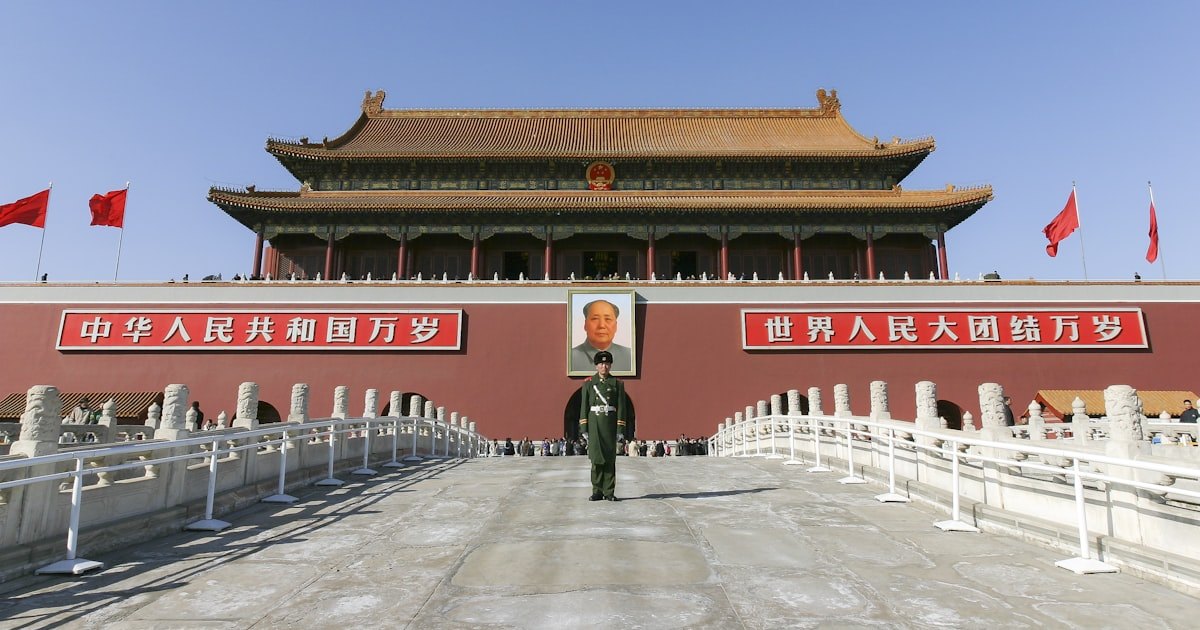
President Donald Trump used a prime-time White House address Thursday to revive his long-running claims about the 2020 election, with the White House preparing to release newly declassified material that officials said would allege Chinese access to U.S. voter registration data.
The central technical claim, as described by a White House official to CBS News before and during the speech, is that roughly 220 million voter registration files were “compromised” by China between 2020 and 2023. The official said the files included names, addresses, voting history, party affiliation, military status and phone numbers.
That is not the same thing as proof that votes were changed, voting machines were hacked or the 2020 result was altered. CBS reported that the materials Trump was expected to cite were not expected to include allegations that actual votes were switched or that machines were hacked in the 2020 election.
The distinction matters. Voter registration data can be sensitive, especially when combined with other personal information, but in many states some voter-file fields are public or commercially available. Access to voter files can support targeting, influence operations or surveillance. It does not by itself establish election fraud, ballot manipulation or a changed result.
U.S. intelligence and election-security agencies have previously drawn a hard line between foreign influence campaigns and interference with the technical conduct of an election. A 2021 National Intelligence Council assessment found “no indications that any foreign actor attempted to alter any technical aspect of the voting process in the 2020 US elections,” including voter registration, ballot casting, vote tabulation or results reporting.
The same assessment said China “did not deploy interference efforts” and judged with high confidence that Beijing considered but did not deploy influence efforts intended to change the presidential outcome. The report did note a minority view from the National Intelligence Officer for Cyber that China took some steps to undermine Trump’s reelection, mostly through influence activity rather than technical election interference.
A separate 2021 Justice Department and Department of Homeland Security review reached a similar conclusion, saying the agencies had “no evidence that any foreign government-affiliated actor prevented voting, changed votes, or disrupted the ability to tally votes or to transmit election results in a timely manner.”
CBS also pointed to an earlier declassified intelligence report that said Chinese intelligence analyzed voter registration data from multiple U.S. states to conduct public-opinion analysis around the 2020 general election. That kind of activity can still be a national-security concern: voter data can help foreign governments understand political geography, target messaging or build dossiers. But the public record available Thursday night did not show that such access changed ballots or tabulation.
China denied the allegation. The Chinese Embassy in Washington said ahead of Trump’s speech that China has “never and will never interfere” in U.S. presidential elections, CBS reported.
Trump’s remarks arrive as he presses Congress to pass the SAVE America Act, a voting bill that would require proof of U.S. citizenship to register for federal elections and impose photo-identification requirements. Supporters frame the legislation as election-security reform; critics warn it could make registration harder for eligible voters and say documented noncitizen voting is rare.
For technology readers, the live question is less partisan and more operational: what exactly was accessed, whether it was public or restricted voter-file data, which jurisdictions were affected, what controls failed and whether any new declassified documents change the prior intelligence consensus. Until the underlying documents are public and reviewed, the safest description is that Trump and the White House are alleging Chinese access to voter data — not proven vote-changing interference.
The 2020 election was repeatedly reviewed by courts, state officials and federal agencies. The U.S. Cybersecurity and Infrastructure Security Agency and election infrastructure partners called it “the most secure in American history” in November 2020 and said there was no evidence that any voting system deleted votes, lost votes, changed votes or was compromised.
Shadowfetch will update this story if the White House publishes the declassified documents referenced in the speech or if federal election-security agencies provide new technical findings.
Sources
- CBS News: Watch Live: Trump giving primetime speech on elections as White House alleges Chinese access to voter data
- Office of the Director of National Intelligence: Foreign Threats to the 2020 US Federal Elections, declassified intelligence community assessment
- U.S. Department of Justice / Department of Homeland Security: March 2021 report on foreign government activity and election infrastructure
- CISA and election infrastructure partners: Joint statement on the 2020 election infrastructure
Shadowfetch is a technology publication. Explore Shadowfetch Linux — our own Linux build — and the Shadowfetch apps on the App Store.
Sources
- Watch Live: Trump giving primetime speech on elections as White House alleges Chinese access to voter data
- March 2021 report on foreign government activity and election infrastructure
- Joint statement on the 2020 election infrastructure
The article cites CBS reporting, prior declassified intelligence and federal reviews, agency statements, and China's Embassy denial.
Evidence types: direct reporting, official assessment, federal review, public statement
Links verified
See a problem in this story? Report an error · Corrections policy · Our methodology
The Daily Download
One morning email: the day’s biggest technology stories — AI, new devices, and the companies shaping them.
Related coverage
 Technology
China’s new AI-governance bloc turns standards into a geopolitical contest
Kimmy Conner ·
 Technology
Telstra’s outage explanation is a reminder to make your phone less single-point-of-failure
Shannon Bulz ·
 Technology
Europe’s Google order turns AI search into a reader-choice test
Celine Moreau ·