
Climate & Environment
The North Atlantic Heat Anomaly: A System in Transition
The North Atlantic is currently enduring a sustained marine heatwave that offers a window into a changing oceanic system under long-term climate pressure.

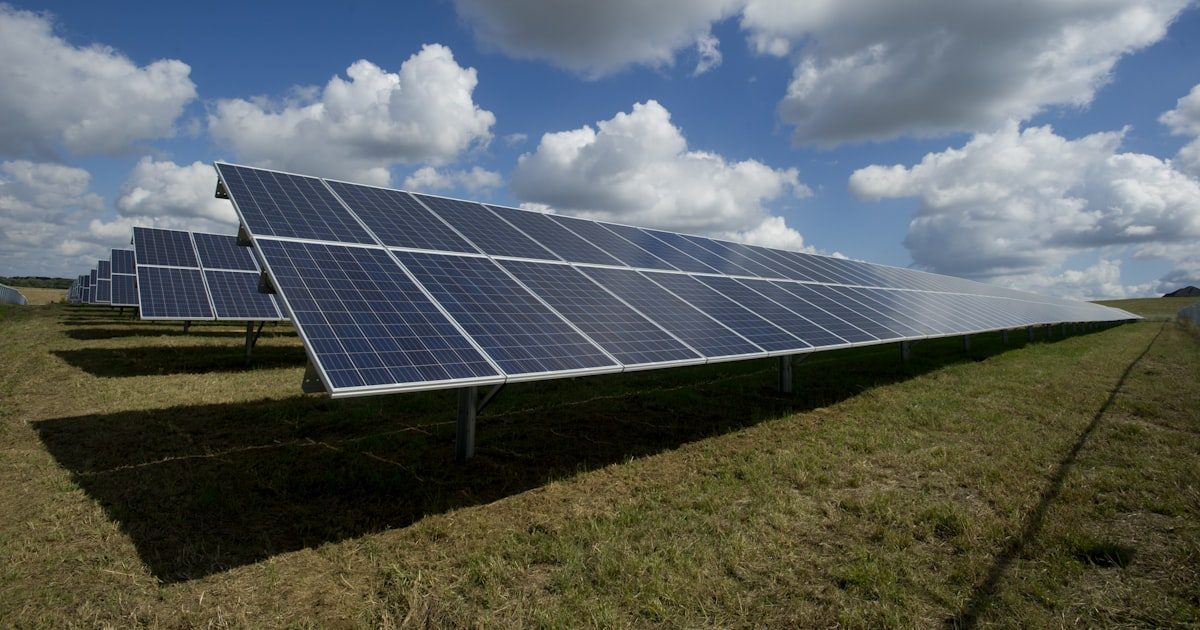
The North Atlantic, a critical engine of the Earth’s climate system, is currently enduring a sustained marine heatwave that defies historical norms. As of July 2026, sea surface temperatures (SSTs) across wide swathes of the North Atlantic continue to track significantly above the 1991–2020 climatological baseline. This is not merely an isolated weather event but a window into a changing oceanic system under the influence of long-term anthropogenic climate forcing and short-term atmospheric variability.
Distinguishing Event from System
To understand the current state of the North Atlantic, one must carefully distinguish between the immediate event and the underlying climate distribution. A marine heatwave—defined as a discrete period of anomalously high ocean temperatures—is a meteorological and oceanographic event. It is driven by specific atmospheric configurations, such as weakened trade winds, shifted high-pressure systems, or changes in regional oceanic circulation.
However, the North Atlantic’s current baseline has been shifted upward by decades of sustained oceanic heat absorption. The ocean acts as the primary heat sink for the climate system, absorbing over 90% of the excess heat trapped by greenhouse gases. Consequently, what was historically considered an extreme heat event now occurs against a warmer, higher-energy background. While individual heatwaves are events, the frequency, duration, and intensity of these events are shifting, reflecting a fundamental change in the system’s distribution.
Tracking the Anomaly
Data from official monitoring agencies, including the National Oceanic and Atmospheric Administration (NOAA) and the European Space Agency’s (ESA) Copernicus Marine Service, illustrate this trend with high precision. These agencies use a combination of satellite-based radiometry and in-situ measurements from buoys and Argo floats to quantify SSTs globally.
In recent years, the North Atlantic has consistently reached new record-high anomalies in the spring and early summer. By July 2026, observing systems have documented sustained departures from the mean that exceed two standard deviations in several regions, including the subtropical gyre and parts of the subpolar North Atlantic. While instrumental measurement provides high temporal and spatial resolution, these data must be viewed through the lens of uncertainty. Uncertainties arise from instrument calibration, gaps in coverage in certain regions, and the integration of varying datasets. Official reporting bodies address these through rigorous peer-review and multi-model ensemble analysis.
Ecological and Climatic Consequences
The ecological implications of these temperatures are profound and well-documented. Marine species operate within defined thermal niches. When SSTs rise, species must migrate to cooler waters, adjust their life cycles, or face local extirpation. In the North Atlantic, we have observed significant shifts in the distributions of commercially important fish stocks, such as Atlantic cod and mackerel, as they track cooling temperatures poleward.
Furthermore, the structure of entire marine ecosystems is threatened. Warm-water coral reef systems are largely absent in the high latitudes, but the mid-latitude kelp forests and sea-grass meadows that support high levels of biodiversity are sensitive to thermal stress. Sustained heat anomalies can trigger mass mortality events in these foundational habitats, with cascading effects through the entire trophic web.
From a meteorological standpoint, the anomalously warm North Atlantic provides a massive reservoir of thermal energy to the atmosphere. This energy, coupled with increased moisture content, fundamentally changes the development of tropical cyclones. While warmer waters generally fuel more intense storms, the relationship between SSTs and hurricane development is highly non-linear. Future projections remain subject to significant uncertainty regarding storm frequency, track, and landfall impact, as atmospheric circulation patterns are also shifting.
Uncertainty in Projections
Climate projections for the mid-to-long term are essential for infrastructure planning and risk assessment. However, forecasting the exact behavior of the North Atlantic system over the coming decades is an exercise in managing calibrated uncertainty. Global Climate Models (GCMs) provide the best estimates of system response, yet they struggle to resolve fine-scale oceanic processes, such as eddies and boundary currents, which play a major role in regional temperature distribution.
When reviewing official climate projections, it is crucial to consider the scenario used—ranging from low-emissions pathways to high-emissions, business-as-usual scenarios—and the period of study. No single model projection is a definitive prediction of the future. Rather, ensemble approaches allow scientists to characterize the range of possible outcomes and the probability associated with each.
Building Resilience
The current state of the North Atlantic underscores the urgent need for a more comprehensive approach to ocean governance and climate resilience. The infrastructure of our coastal communities, global shipping, and food security are all intrinsically linked to the health of the North Atlantic. Adaptation strategies must be grounded in primary observational evidence, accounting for both the known risks and the inherent unpredictability of a system in transition.
Resilience requires moving beyond reactionary disaster management. It entails long-term investment in adaptive infrastructure, protected marine areas that offer thermal refugia, and robust monitoring networks that can provide early, verifiable signals of system stress. The evidence is clear: the system is warming. How we interpret this data and how we integrate it into our policy frameworks will determine our success in navigating the challenges of the coming century.
Sources
- National Oceanic and Atmospheric Administration (NOAA) Physical Sciences Laboratory - Sea Surface Temperature Data
- Copernicus Marine Service (ESA) - Global Ocean Monitoring
- World Meteorological Organization (WMO) - State of the Climate Reporting
Shadowfetch is a technology publication. Explore Shadowfetch Linux — our own Linux build — and the Shadowfetch apps on the App Store.
Sources
- National Oceanic and Atmospheric Administration (NOAA) Physical Sciences Laboratory - Sea Surface Temperature Data
- Copernicus Marine Service (ESA) - Global Ocean Monitoring
- World Meteorological Organization (WMO) - State of the Climate Reporting
The article cites official monitoring data and reporting from NOAA, Copernicus Marine Service, and WMO, with satellite and in-situ measurements described.
Evidence types: official monitoring data, satellite measurements, in-situ measurements, official climate reporting
Links verified
See a problem in this story? Report an error · Corrections policy · Our methodology
The Daily Newsletter
One morning email: the day’s biggest technology stories — AI, new devices, and the companies shaping them.
Related coverage
 Climate & Environment
The Attribution Threshold: Moving Beyond Binary Climate Causation
Chris Paterson ·
 Climate & Environment
Catastrophic Flash Flooding in Texas Hill Country: A Hydrologic System Strained
Chris Paterson ·
 Climate & Environment
Flash Flood Risk Targets New York, New Jersey and Southern New England as Slow-Moving Storms Train Over the Northeast
Daniela Imani Reyes ·